Enquire now with Startup Advisory

Faqs

Company Registration

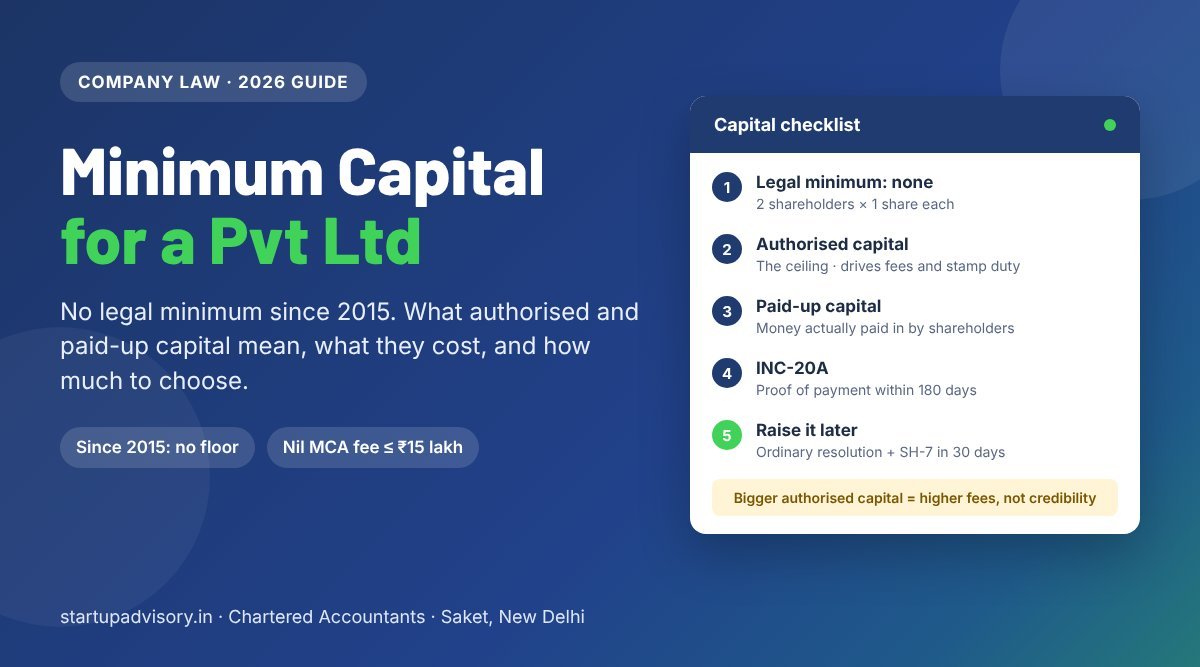
There is no minimum capital requirement to register a company in India. As per the Companies Act, 2013, you can start a Private Limited Company with ₹1 as authorized capital. However, capital should be adequate to meet your business needs.

Yes, an individual can register a One Person Company (OPC) under Indian law. It's ideal for solo entrepreneurs looking for limited liability and full control of the business.

It typically takes 5–7 working days to register a Private Limited Company, depending on document readiness and MCA approval timelines. We offer fast-track registration services with end-to-end support.

The most common structures are Private Limited Company, One Person Company (OPC), Limited Liability Partnership (LLP), Partnership Firm and Sole Proprietorship. Our team in Saket, New Delhi helps you choose the right structure based on liability, funding plans and compliance needs.

You typically need PAN and Aadhaar of all directors, passport-size photos, identity and address proof, and proof of the registered office address (rent agreement or utility bill with an NOC). We arrange the DSC and DIN as part of the process.

A Private Limited Company is preferred by startups that plan to raise equity funding and issue shares, while an LLP suits professional firms and small businesses seeking lower compliance. A Pvt Ltd has stricter compliance but greater credibility with investors.

A standard 2-director Private Limited Company in Delhi typically costs ₹7,000–₹25,000 all-inclusive, covering DSC, name reservation, stamp duty and professional fee. The SPICe+ government filing fee is nil for authorized capital up to ₹15 lakh, and Delhi has among the lowest stamp duty in India. LLP and OPC usually cost less. Call 9311972982 for an exact, fixed-fee quote.

You need a valid registered office address in India, which can be commercial or residential premises. Businesses in Gurugram, Noida, Ghaziabad or Faridabad can register using a local address, and we guide you on the required address proof.

A Digital Signature Certificate (DSC) is used to sign filings electronically, and a Director Identification Number (DIN) is a unique ID for every director. Both are mandatory for company registration, and we arrange them as part of our service.

Yes, foreign nationals and NRIs can be directors and shareholders in an Indian company, provided at least one director is a resident of India. We assist with the additional documentation and FEMA compliance involved.

Post-incorporation compliances include obtaining PAN and TAN, opening a current bank account, GST registration (if applicable), annual ROC filings, board meetings and income-tax returns. Our team manages ongoing compliance so you stay penalty-free.

Yes. The entire company registration process is 100% online. Clients across Delhi NCR and India can complete it remotely, and we coordinate documents digitally from our office in Saket, South Delhi.

Authorized capital is the maximum value of shares a company can issue, while paid-up capital is the amount actually invested by shareholders. There is no minimum paid-up capital requirement for a Private Limited Company in India.

Yes. Since 2021, NRIs and Indian citizens residing abroad are allowed to incorporate a One Person Company (OPC) in India, subject to the prescribed residency condition. Foreign nationals can also be directors and shareholders in a Private Limited Company under FEMA and RBI rules, and we handle the additional documentation involved.

An LLP is usually cheaper to register and maintain than a Private Limited Company, mainly due to lower stamp duty on capital and lighter annual compliance. A Pvt Ltd is preferable if you plan to raise equity funding or issue ESOPs. We help you weigh cost against your growth and funding plans.

GST Registration

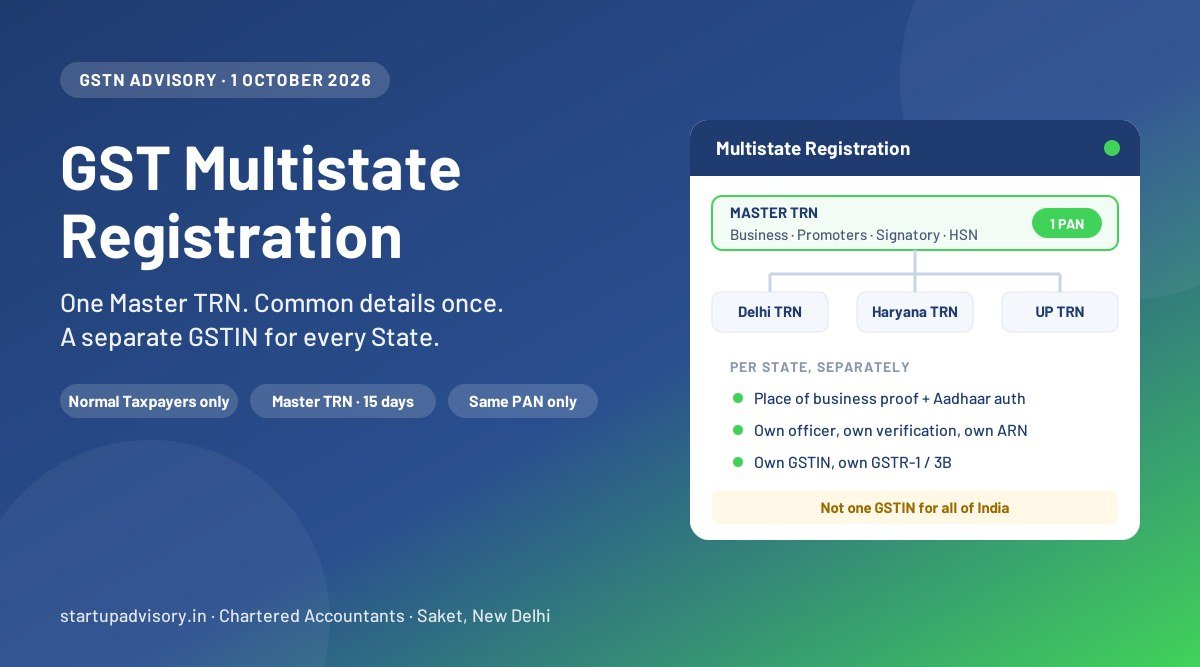
GST registration enrols a business under the Goods and Services Tax and gives it a 15-digit GSTIN, allowing it to legally collect GST and claim input tax credit. It is mandatory once turnover crosses the threshold, and also for e-commerce sellers, inter-state suppliers and certain other businesses regardless of turnover.

In normal states, GST registration becomes mandatory once aggregate turnover exceeds ₹40 lakh for suppliers of goods and ₹20 lakh for suppliers of services. In special category states the limits are ₹20 lakh and ₹10 lakh respectively. Turnover is calculated PAN-wide across India.

Not always. A startup needs GST registration once it crosses the turnover threshold, or immediately if it sells inter-state, supplies through e-commerce platforms, or is otherwise required to register. Many startups also register voluntarily to claim input tax credit and look credible to B2B clients.

Under the simplified scheme (Rule 14A, effective 1 November 2025) and for low-risk applicants, GST registration can be granted within 3 working days of Aadhaar authentication. A normal application is usually approved within 7 working days, and up to 30 working days where physical verification is required.

No. The government charges no fee for GST registration. You only pay a professional fee for preparation and filing. Startup Advisory works on transparent, fixed fees — call 9311972982 for an exact quote.

The composition scheme lets small businesses with turnover up to ₹1.5 crore pay GST at a low fixed rate with simpler quarterly returns, and service providers up to ₹50 lakh can pay at 6%. Composition dealers cannot claim input tax credit or make inter-state sales.

Registered businesses typically file GSTR-1 (outward supplies) and GSTR-3B (summary and tax payment) monthly or quarterly under QRMP, plus an annual GSTR-9 above the prescribed turnover. We manage your GST returns end-to-end so you never miss a deadline.

Yes. Because GST registration is fully online, we register businesses in Delhi, Gurugram, Noida, Greater Noida, Ghaziabad and Faridabad from our Saket, New Delhi office, and guide you through Aadhaar authentication remotely.

Startup India Registration

To be eligible for Startup India DPIIT recognition, the entity must be:
  • Less than 10 years old

  • Incorporated as a Pvt Ltd, LLP, or Registered Partnership

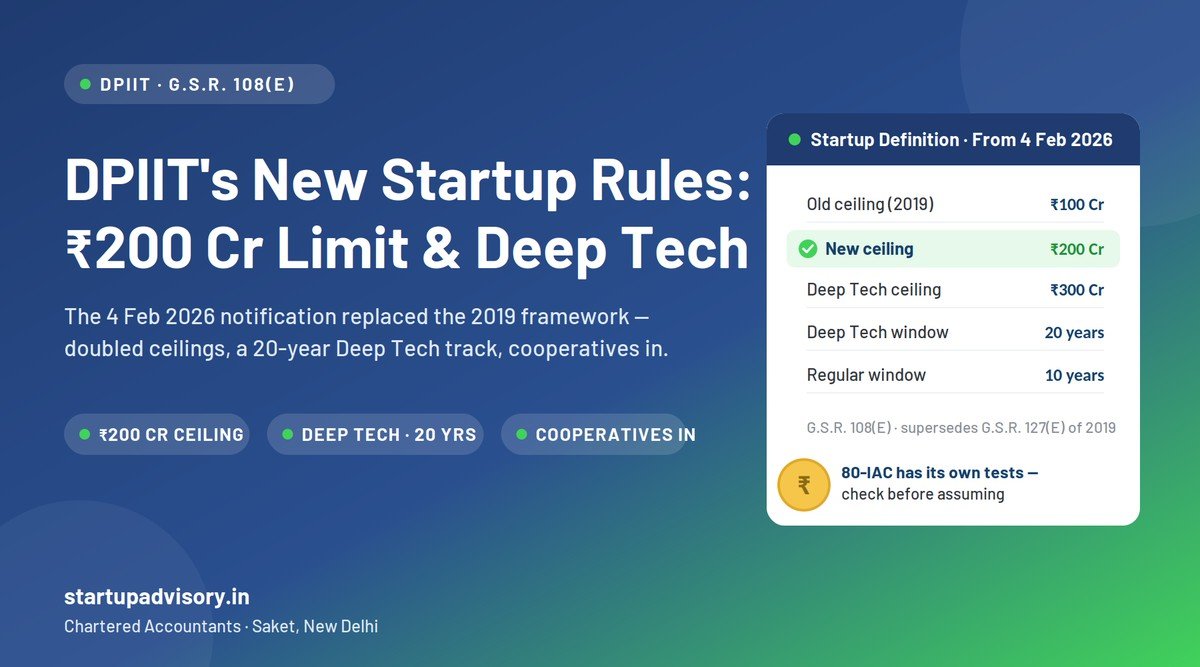
  • Having an annual turnover of less than ₹100 crore

  • Working on innovation or improvement of products/services

Key documents include:
  • Certificate of Incorporation

  • Director/Partner details

  • A brief write-up or pitch deck explaining your innovation

  • Website or product description

No. After DPIIT recognition, you must separately apply for tax exemption under Section 80-IAC via the Startup India portal. Approval is subject to evaluation by the Inter-Ministerial Board.

DPIIT-recognised startups get self-certification on labour and environmental laws, eligibility for the 80-IAC income-tax holiday, easier access to government tenders and the Startup India Seed Fund, IPR fast-tracking with rebates, and faster company wind-up.

Once a complete application is submitted on the Startup India portal, DPIIT recognition is usually granted within 2–3 working days. We prepare your application and innovation write-up carefully to avoid rejections and delays.

No. DPIIT recognition under Startup India is free of government charges. You only pay a professional fee for documentation, drafting the innovation write-up and handling the application correctly.

Section 80-IAC allows eligible DPIIT-recognised startups to claim a 100% income-tax deduction on profits for any 3 consecutive years within their first 10 years. The startup must be a Pvt Ltd or LLP and apply separately for this exemption.

Yes. Angel Tax under Section 56(2)(viib) was abolished with effect from 1 April 2025 (FY 2025-26) by the Finance Act, 2024, for all classes of investors. New fundraising rounds are no longer taxed on share premium above fair market value.

Yes. An LLP can apply for DPIIT recognition as long as it is less than 10 years old, has turnover under ₹100 crore and is working on an innovative or scalable business model. We handle DPIIT applications for Pvt Ltd companies, LLPs and registered partnerships.

Yes. DPIIT-recognised startups are often exempted from prior-experience and turnover criteria in government and public-sector tenders, and can list on the GeM portal — making it easier for Delhi NCR startups to access government contracts.

The Startup India Seed Fund Scheme provides financial assistance to early-stage startups for proof of concept, prototype development, product trials and market entry. Only DPIIT-recognised startups can apply through approved incubators.

Yes. DPIIT recognition is a central, online process, so startups in Noida, Gurugram, Ghaziabad, Faridabad or anywhere in Delhi NCR can apply through our Saket, New Delhi office without any location restriction.

Once an entity exceeds 10 years from incorporation or crosses ₹100 crore in annual turnover, it ceases to be a startup under DPIIT norms and loses the associated benefits. Exemptions already availed in earlier years are not reversed.

Company registration (incorporation) creates your legal entity — a Pvt Ltd, LLP or OPC — with the Ministry of Corporate Affairs. DPIIT recognition under Startup India is a separate, optional status granted to an already-incorporated, innovative entity under 10 years old, unlocking tax and compliance benefits. You register the company first, then apply for DPIIT recognition.

Book-keeping

Absolutely. Switching is hassle-free with us. We manage the transition process, ensure data import, and set up your books on cloud-based accounting software like Zoho Books, QuickBooks, or Tally Prime.

All financial records are stored on encrypted, cloud-based platforms with multi-factor authentication (MFA) and real-time backups to ensure data security and compliance.

  • Monthly Plans: Flexible, pay-as-you-go model for growing businesses.

  • Yearly Plans: Cost-effective with added benefits like priority support, quarterly reviews, and tax planning sessions.

Bookkeeping is the systematic recording of all financial transactions such as sales, purchases, expenses and payments. Accurate books help startups track cash flow, stay tax-compliant and present clean financials to investors and lenders.

Bookkeeping is the day-to-day recording and categorising of transactions, while accounting interprets that data to prepare financial statements, file taxes and guide decisions. Good bookkeeping is the foundation for reliable accounting.

We work on leading cloud platforms including Zoho Books, QuickBooks and Tally Prime, choosing the one that best fits your business size and workflow. This gives you real-time access to your books from anywhere.

Depending on your plan, books are updated weekly or monthly with regular bank, vendor and ledger reconciliation. This ensures your financial reports are always accurate and ready for GST and ITR filing.

Yes. We can manage GST registration, monthly or quarterly GST returns and reconciliation alongside your bookkeeping, giving you a single point of contact for compliance across Delhi NCR.

Yes. We handle high-volume e-commerce and D2C bookkeeping, including marketplace reconciliations (Amazon, Flipkart, Shopify), payment-gateway settlements and inventory tracking, with clear monthly reporting.

You typically receive a profit and loss statement, balance sheet, cash-flow summary and an outstanding receivables and payables report. We can also customise MIS reports to the metrics that matter to your business.

Yes. Outsourcing bookkeeping is often more affordable and reliable than an in-house hire for small businesses and startups in Delhi NCR. You get professional, CA-supervised books without the cost of a full-time accountant.

We use encrypted cloud platforms, restricted access controls and signed confidentiality agreements. Your data is backed up securely and only accessible to your assigned team.

Yes. Because our bookkeeping is fully cloud-based, we serve clients in Gurugram, Noida, Greater Noida, Ghaziabad and Faridabad just as easily as those near our Saket, South Delhi office.

Virtual CFO Services

Startups, D2C brands, tech firms, healthcare, manufacturing, and service-based MSMEs gain the most. Virtual CFOs help with financial modeling, funding strategy, MIS reporting, and cost control.

Our Virtual CFO package includes:
  • Budgeting & Forecasting

  • Investor Reporting & Fundraising Support

  • Compliance & Tax Management

  • Cash Flow Management

  • Strategic Financial Planning

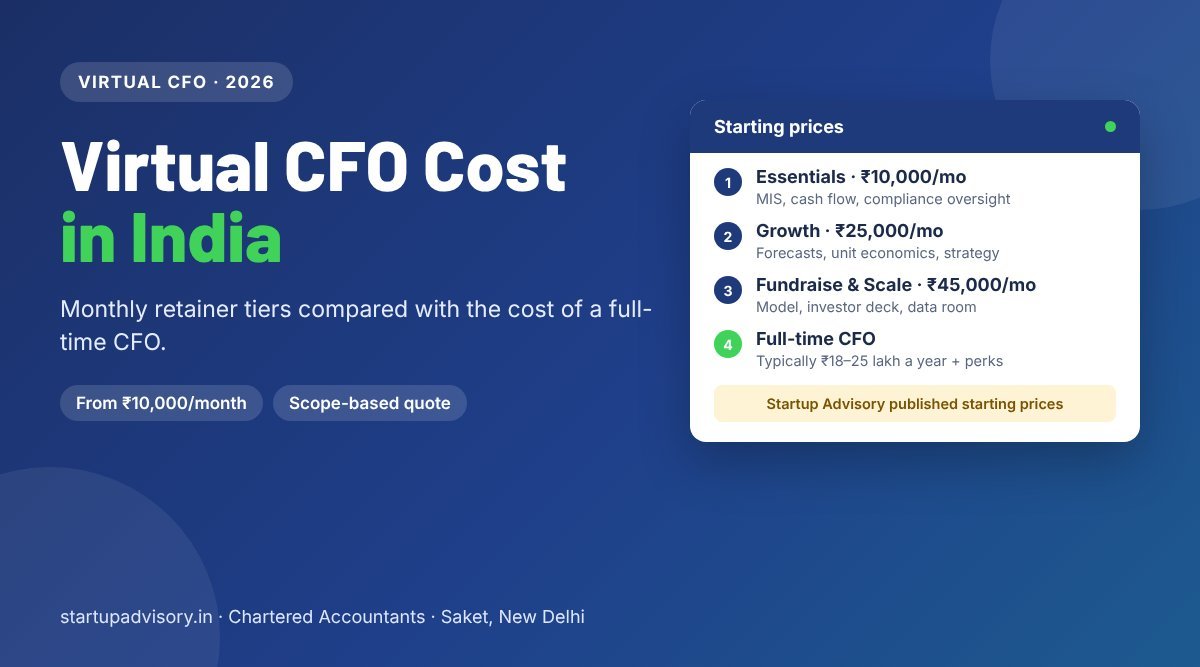
A Virtual CFO is a cost-efficient alternative to hiring a full-time CFO. You get expert insights, flexibility, and domain experience at a fraction of the cost — ideal for scaling businesses.

A Virtual CFO handles high-level finance functions such as budgeting, forecasting, cash-flow planning, MIS and investor reporting, fundraising support and financial strategy — without being a full-time, in-house hire.

Consider a Virtual CFO when you are raising funds, scaling rapidly, struggling with cash flow, or need investor-grade reporting but cannot justify a full-time CFO salary. It's ideal for growth-stage startups in Delhi NCR.

A full-time CFO in Delhi NCR can cost several lakhs per month in salary and benefits. A Virtual CFO gives you similar expertise on a flexible monthly retainer — often a fraction of that cost — scaled to your needs.

Yes. A Virtual CFO prepares financial models, projections, pitch-ready data rooms and investor MIS, and supports due diligence during seed and growth funding rounds.

Yes. A Virtual CFO complements your existing bookkeeper or finance team, providing strategic oversight, review and reporting while your team handles day-to-day execution.

A Virtual CFO builds cash-flow forecasts, monitors burn rate and runway, optimises receivables and payables, and flags shortfalls early — so you always know how many months of runway you have.

A Virtual CFO delivers periodic investor MIS, including revenue and growth metrics, burn and runway, unit economics, budget-versus-actuals and board-ready financial dashboards.

Yes. Even pre-revenue startups benefit from financial modeling, fund-utilisation planning, compliance setup and investor reporting — helping you spend wisely and stay investor-ready from day one.

Yes. Our Virtual CFO services are delivered remotely with regular review calls, so startups in Gurugram, Noida, Ghaziabad, Faridabad and across Delhi NCR get the same support as clients near our Saket office.

We operate on secure, encrypted systems with role-based access and confidentiality agreements. Sensitive financial data is handled under strict controls and shared only with authorised stakeholders.

ITR Filing & Tax Advisory

An Income Tax Return (ITR) is a form filed with the Income Tax Department declaring your income, deductions and taxes for a financial year. Anyone with income above the basic exemption limit — and many others claiming refunds or supporting loan and visa applications — needs to file.

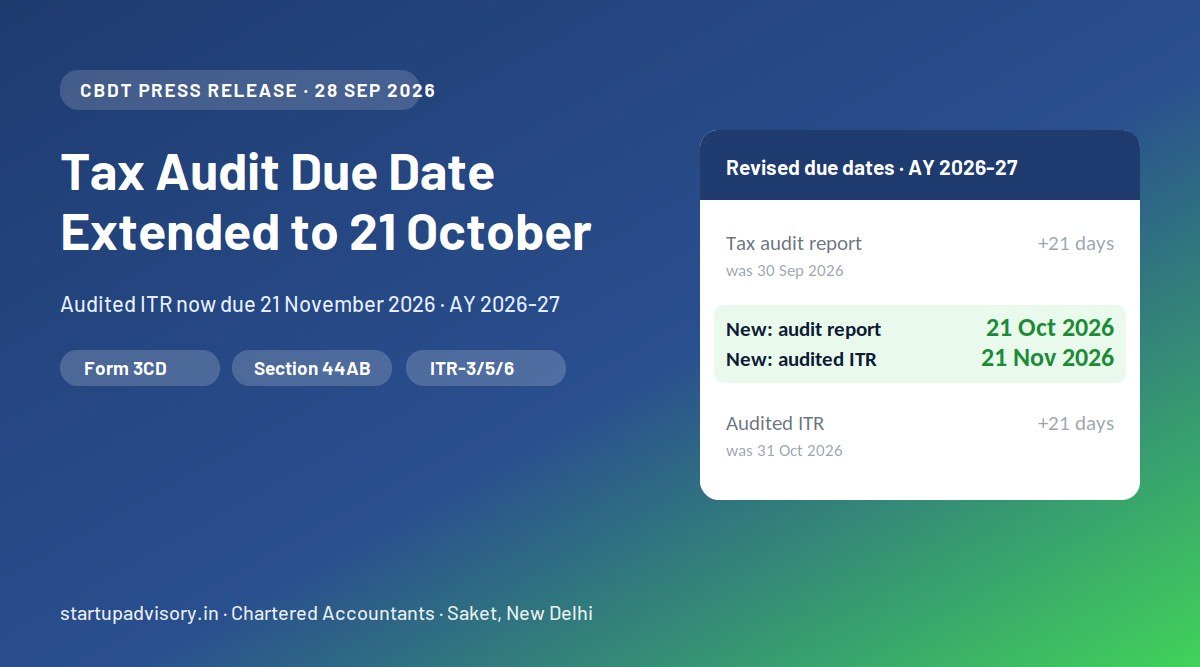
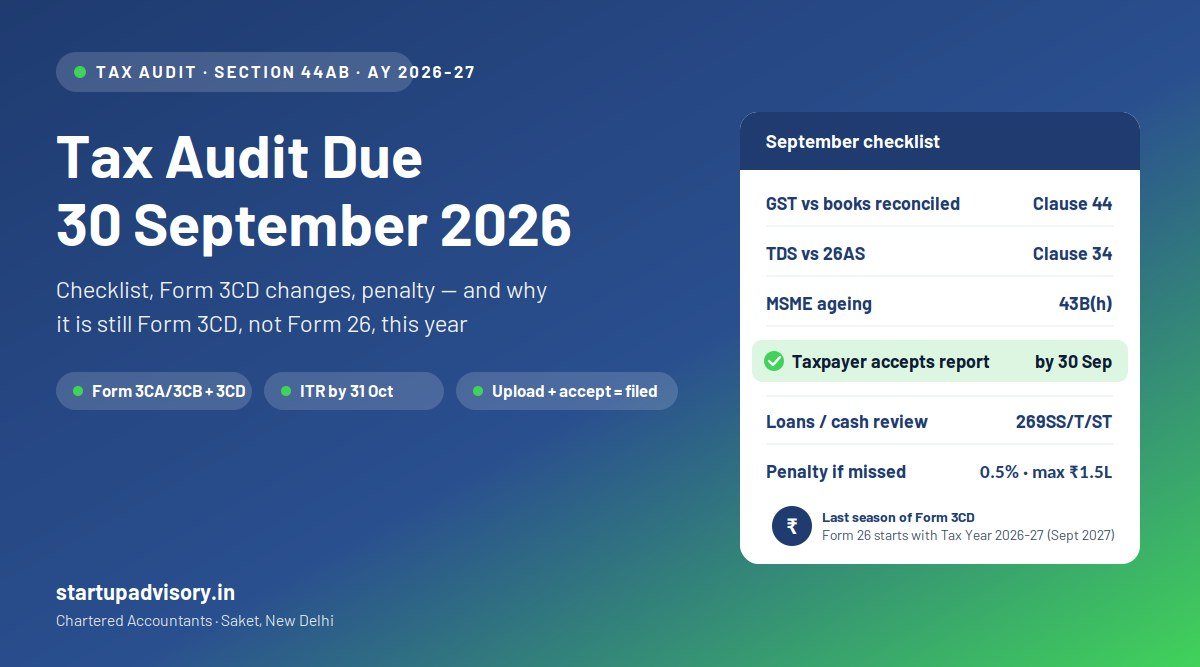
For most individuals not requiring an audit, the due date is usually 31 July of the assessment year. For businesses and taxpayers requiring an audit, it is generally 31 October. We help you file well before the deadline to avoid penalties.

The correct ITR form depends on your income sources such as salary, business or profession, capital gains, house property or foreign income. Our CA team selects the right form for you to ensure error-free filing and avoid notices.

Common documents include PAN, Aadhaar, Form 16, bank statements, interest certificates, investment proofs for deductions, and details of any business or capital-gains income. We provide a simple checklist based on your profile.

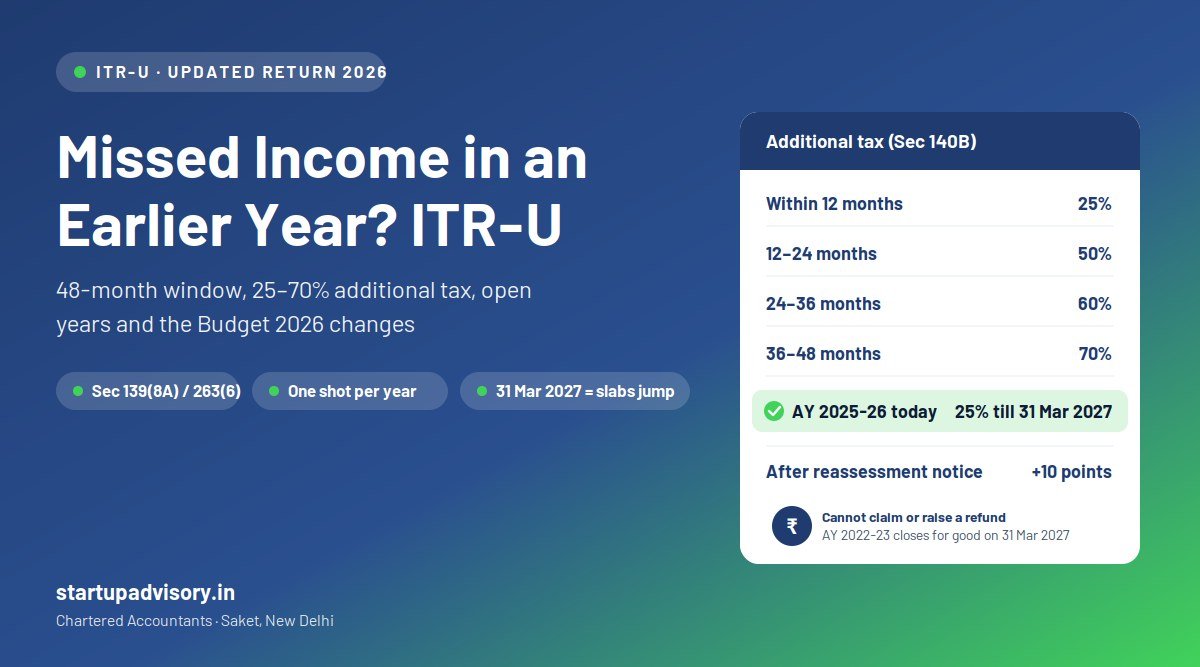
Filing after the due date can attract a late fee, interest on unpaid tax and loss of certain benefits like carrying forward some losses. A belated return can usually still be filed within the allowed window, and we help you do this correctly.

Yes. We file income-tax returns for proprietors, partnerships, LLPs and companies across Delhi NCR, handling business income, depreciation and applicable deductions, all CA-supervised from Saket, New Delhi.

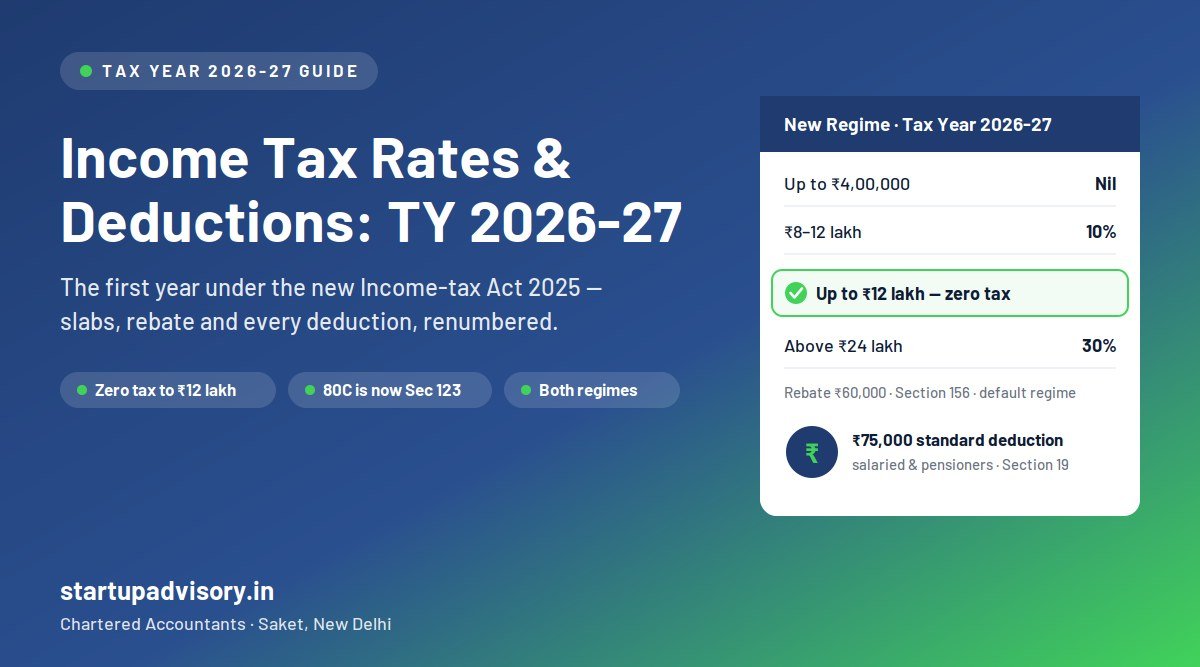
Legitimate tax savings come from claiming eligible deductions such as 80C, 80D and HRA, choosing the right tax regime, and accurate reporting of income and TDS. Our advisory ensures you claim everything you are entitled to.

Yes. Freelancers, consultants and gig workers with income above the exemption limit must file an ITR, and may benefit from presumptive taxation schemes. We help you report professional income and claim allowable expenses.

Yes. Our team reviews the notice, identifies the issue, and drafts an appropriate response or revised return. Acting promptly on income-tax notices is important to avoid penalties.

NRIs must file an ITR in India if their India-sourced income exceeds the basic exemption limit, or to claim refunds on TDS. We advise NRIs on residential status, DTAA benefits and accurate filing.

Our Testimonials

Our Clients

Latest Updates

Fresh guides on tax, GST and startup compliance from our CA team.

Get a Free Consultation

Share your details — our experts call you back.