
Bookkeeping
7 Bookkeeping Mistakes That Cost Delhi Startups Money (and How to Avoid Them)

In short
The costliest bookkeeping mistakes are also the most avoidable: mixing personal and business money, delaying entries, skipping monthly reconciliation, missing GST/TDS deadlines, losing receipts, mis-classifying expenses, and treating bookkeeping as a year-end task. Each quietly drains money through penalties, lost input credit or missed deductions. Fix them with simple habits — or hand the lot to a bookkeeper.
Most startups don't fail because of one big accounting blunder — they bleed money slowly through small, repeated bookkeeping mistakes. Here are the seven we see most often in Delhi NCR, and how to stop each.
1. Mixing personal and business finances
The classic and most damaging error. Paying business costs from a personal card (or vice-versa) makes books messy, taxes error-prone and the real numbers impossible to read. Fix: a dedicated business account, used for everything business.
2. Letting transactions pile up
Recording months of activity in one frantic session guarantees errors and forgotten expenses. Fix: record weekly, or use bank feeds in your accounting software to import automatically.
3. Never reconciling
If your books don't match your bank, something's wrong — and you won't know until it's expensive. Fix: reconcile every month without exception.
4. Missing GST and TDS deadlines
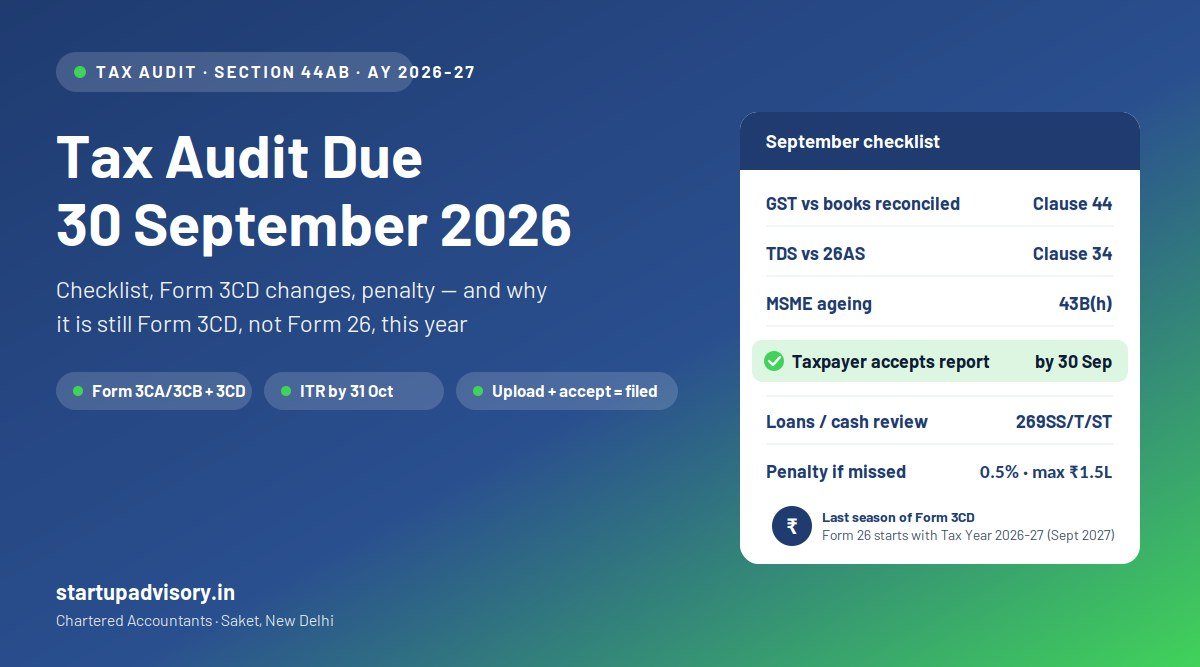
Late filings mean late fees, interest and potential loss of input tax credit. Fix: keep a compliance calendar (see our GST/TDS calendar) with reminders, or outsource the filings.
5. Losing receipts and invoices
No proof, no deduction — and trouble in an audit. Fix: photograph or upload every receipt to your accounting tool the day you get it.
6. Mis-classifying expenses
Putting costs in the wrong category distorts your P&L and can cost you deductions or invite questions. Fix: use a consistent chart of accounts and have a professional review classifications.
7. Treating bookkeeping as a year-end chore
Books done only at tax time give you no visibility for decisions and a stressful, error-prone scramble. Fix: keep books current monthly so you always have real numbers — and a calm filing season.
The simplest fix of all
Every mistake above disappears with consistent, professional bookkeeping. Our Saket team keeps Delhi NCR startups' books clean, reconciled and compliant all year — see Bookkeeping, and as you grow, a Virtual CFO turns those clean numbers into better decisions.
How Startup Advisory Can Help
Startup Advisory is a CA-led firm in Saket, New Delhi that fixes and prevents exactly these bookkeeping mistakes for startups across Delhi NCR. Whether your books are messy or you want them done right from the start, we take it off your plate:
- Clean-up and ongoing bookkeeping on cloud software, with proper bank reconciliation.
- Separation of personal and business finances, and GST/TDS handled on time.
- Monthly reports you can actually use, plus Virtual CFO insight as you grow.
- A named expert who catches errors before they become tax problems.
Call 9311972982 or book a free consultation to get your books back on track.