
Tax & ITR
Section 194C: TDS on Payments to Contractors — 2026 Guide

In short
If your business pays a contractor for any work — construction, transport, catering, advertising, manpower supply, job-work — you must deduct TDS at 1% (payment to an individual/HUF) or 2% (payment to anyone else) once a single payment crosses Rs 30,000 or the year's total to that contractor crosses Rs 1,00,000. This was Section 194C of the 1961 Act. From 1 April 2026 the same rules sit in Section 393(1) of the Income Tax Act 2025. Rates and thresholds are unchanged; what changed is the section number, the return forms, and a clear confirmation that manpower supply is covered. Miss the deduction and 30% of the payment is disallowed as an expense.
Section 194C is one of the most frequently triggered TDS provisions, because almost every business pays contractors of some kind. Here is what you actually need to know for FY 2026-27 — without the legalese.
What Section 194C covers — and why it is now Section 393
Section 194C governs tax deducted at source (TDS) on payments to a resident contractor or sub-contractor for carrying out any work, including the supply of labour, under a contract.
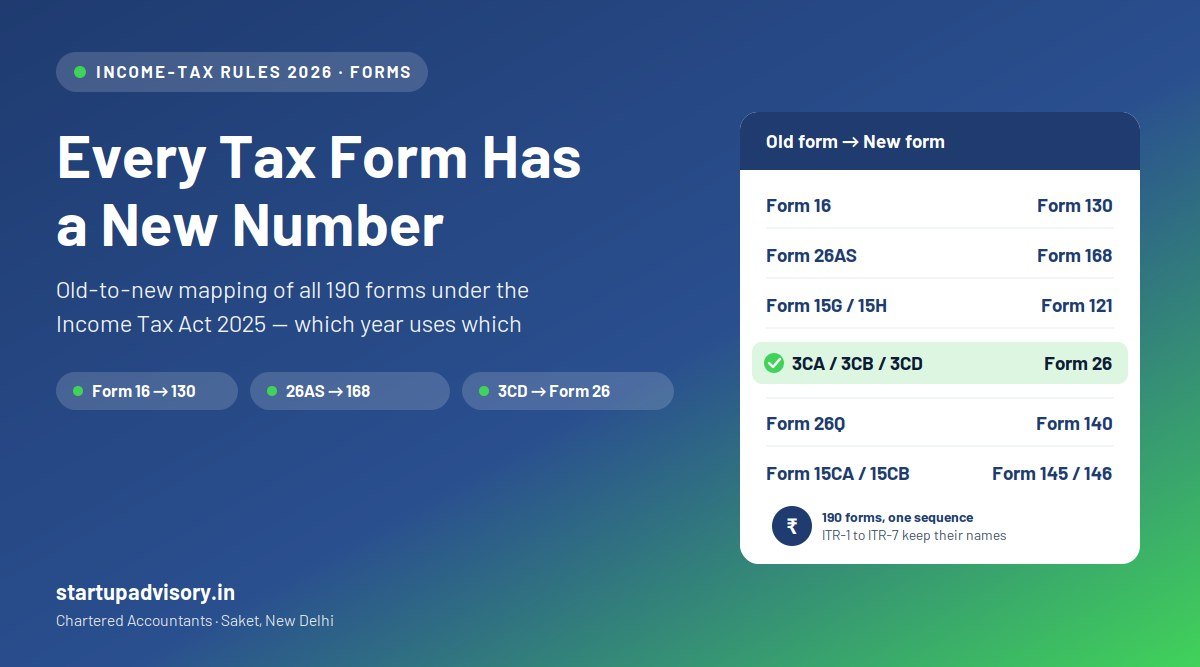
The key 2026 development: the Income Tax Act 2025 replaced the 1961 Act from 1 April 2026, consolidating more than sixty scattered TDS sections into a small set of parent provisions. Old Section 194C is now Section 393(1), Table Sl. No. 6(i) — split into 6(i).D(a) for an individual/HUF contractor and 6(i).D(b) for everyone else. The substance is preserved; the reference number is what changed. Because "194C" is so widely understood, this guide uses it throughout while flagging the Section 393 reference where it matters.
The 2026 transition: which law applies to your payment?
This is the question that trips up most businesses in the changeover year. The rule is simple and date-based:
| When payment is credited or paid (whichever is earlier) | Section to quote | Return form |
|---|---|---|
| On or before 31 March 2026 (FY 2025-26, including Q4) | Section 194C, Income Tax Act 1961 | Form No. 26Q |
| On or after 1 April 2026 (FY 2026-27 / Tax Year 2026-27) | Section 393(1), Income Tax Act 2025 | Form No. 140 (Earlier Form No. 26Q) |
The governing law is decided by the date of credit or payment, not the date you file. So a Q4 FY 2025-26 return filed after April 2026 still uses the old section and old form. From Tax Year 2026-27, returns moved to 4-digit TRACES payment codes in place of section references — confirm the exact contractor code with your TDS software or the current CBDT notification before filing your first quarter, because filing with old section codes triggers validation errors.
Who must deduct TDS on contractor payments?
- Always deduct: companies, firms, LLPs, the Central/State Government, local authorities, trusts, co-operative societies, registered societies and statutory corporations.
- Individuals and HUFs deduct only if their turnover exceeded Rs 1 crore (business) or gross receipts exceeded Rs 50 lakh (profession) in the immediately preceding financial year — and even then, not on payments made purely for personal purposes.
What counts as “work”?
“Work” is defined inclusively and covers:
- Advertising
- Broadcasting and telecasting, including production of programmes
- Carriage of goods or passengers by any mode of transport other than railways
- Catering
- Manufacturing or supplying a product to a customer's specification using material purchased from that customer or its associate (job-work)
- Supply of manpower to work under the payer's supervision and control — see the note below
Manpower supply — the clarification with teeth (from 1 April 2026)
For years there was a dispute over whether deploying contract workers — security, housekeeping, staffing — was a works contract (194C) or a professional/technical service (194J). The Income Tax Act 2025 settles it: supply of manpower to work under the payer's supervision and control is “work”, deducted at 1% or 2%, not the higher professional-fee rate. If your business treated these invoices as outside TDS, or under 194J, correct it for all payments from April 2026. Under-deduction here hits your P&L through expense disallowance.
TDS rates under Section 194C
| Payment made to | TDS rate |
|---|---|
| Resident individual or HUF contractor | 1% |
| Any other resident (company, firm, LLP, etc.) | 2% |
| Contractor who does not furnish a valid PAN | 20% (no-PAN higher-rate rule, old Section 206AA) |
No surcharge or cess is added to these rates for resident payments. Budget 2026 did not change the contractor rates or thresholds. A useful simplification: the earlier higher-TDS rule for income-tax-return non-filers (old Section 206AB) has been removed, so you no longer need to verify a contractor's filing status.
Threshold limits — and the trap in the aggregate test
No TDS is required if both of these hold:
- A single payment does not exceed Rs 30,000; and
- The aggregate of all payments to that contractor in the year does not exceed Rs 1,00,000.
If either limit is breached, TDS applies. The trap: once the Rs 1,00,000 annual aggregate is crossed, TDS is due on the entire amount paid during the year, including earlier instalments that were individually below Rs 30,000.
Three worked examples
| Scenario | TDS position |
|---|---|
| Single bill of Rs 25,000 to an individual contractor, nothing else that year | No TDS — below both Rs 30,000 single and Rs 1,00,000 aggregate |
| Rs 28,000 paid four times to an individual (Rs 1,12,000 total) | Each bill below Rs 30,000, but aggregate crosses Rs 1,00,000 — 1% on the full Rs 1,12,000 = Rs 1,120 |
| Single bill of Rs 50,000 to a private limited company | Single payment above Rs 30,000 — 2% on Rs 50,000 = Rs 1,000 |
Sub-contractors
Section 194C applies not only to a business paying a contractor, but also to a contractor paying a sub-contractor for carrying out (wholly or partly) work he has taken on. The same thresholds apply; the rate is 1% or 2% depending on whether the sub-contractor is an individual/HUF or otherwise.
Transporter exemption
No TDS is required on payments to a transporter engaged in plying, hiring or leasing goods carriages, provided the transporter:
- owns ten or fewer goods carriages at any time during the year; and
- furnishes a PAN together with a declaration to that effect.
Keep the PAN and signed declaration on file. If either condition fails — more than ten carriages, or no PAN/declaration — normal Section 194C TDS applies.
GST and material components
- GST: if GST is shown separately on the invoice, deduct TDS only on the value of work, excluding GST. If not shown separately, TDS is on the full invoice value.
- Composite (material + labour) contracts: where material cost is invoiced separately, TDS applies on the labour/service portion; where it is not, on the whole contract value. The anti-avoidance rule on customer-supplied material (job-work) continues to apply.
When to deduct, deposit and report
| Action | Timing |
|---|---|
| Deduct TDS | At the time of credit or payment, whichever is earlier |
| Deposit with Government | By the 7th of the following month; for deductions in March, by 30 April |
| Quarterly return | Form No. 140 (Earlier Form No. 26Q) — due 31 July, 31 October, 31 January and 31 May |
| TDS certificate to contractor | Form No. 131 (Earlier Form No. 16A) within 15 days of the return due date |
What non-compliance actually costs
- 30% expense disallowance: fail to deduct (or deduct but not deposit) and 30% of the payment is disallowed as a business expense, inflating taxable profit — often the single largest cost.
- Interest: 1% per month for failure to deduct; 1.5% per month from deduction to deposit if you deducted but did not pay.
- Penalty: a penalty equal to the tax not deducted may be levied, alongside late-filing fees for the return.
194C vs 194J — getting the classification right
Section 194C covers works contracts — construction, transport, catering, advertising, job-work and (now explicitly) manpower supply — at 1%/2%. Section 194J covers professional and technical services — chartered accountants, lawyers, doctors, architects, technical consultants — at 10% (2% for certain technical services). Misclassifying a staffing contract as a 194J professional service is one of the most common and costly errors; after the 2026 clarification, treat security, housekeeping and staffing as contractor payments.
Quick compliance checklist
- Confirm whether you are a specified person (or crossed the Rs 1 crore / Rs 50 lakh trigger as an individual/HUF).
- Collect a valid PAN from every contractor before the first payment — no PAN means 20%.
- For transporters, collect a PAN and a goods-carriage declaration.
- Track payments contractor-wise against the Rs 30,000 single and Rs 1,00,000 aggregate limits.
- Deduct at 1% or 2%, on value excluding GST where shown separately.
- Deposit by the 7th (30 April for March); file the quarterly return; issue the TDS certificate on time.
- For Tax Year 2026-27, quote Section 393 / the new payment codes and use the renumbered forms.
General information, not tax advice. TDS rates, thresholds and section references change with each Finance Act; confirm the current position for your facts before acting.
How Startup Advisory Can Help
Startup Advisory is a CA-led firm in Saket, New Delhi that handles contractor TDS for businesses across Delhi NCR — so deductions, deposits, returns and certificates are correct and on time under the new Section 393 framework:
- End-to-end TDS compliance as part of our bookkeeping and Virtual CFO services.
- Correct classification of contractor vs professional payments (194C vs 194J) to avoid disallowance.
- Tax advisory aligned with the Income-tax Act 2025 and the latest CBDT clarifications.
- A named CA who tracks every amendment so you do not have to.
Call 9311972982 or book a free consultation to get your TDS right the first time.
Frequently Asked Questions
Primary sources
The statements of law and figures above are drawn from the official texts below. Each link was checked on 18 September 2026; government portals reorganise their pages from time to time, so tell us if one has moved.