An IEC (Import Export Code) is a 10-digit code issued by the DGFT that lets your business legally import or export from India. Startup Advisory handles 100% online IEC registration across Delhi NCR – usually issued in 1–3 working days – with a CA-led team based in Saket, New Delhi.
 What it is: A 10-digit Importer-Exporter Code from the DGFT, required for cross-border trade.Who needs it: Any importer or exporter of goods or services – proprietorship, partnership, LLP or company.Government fee: ₹500, one-time and non-refundable, on the DGFT portal.Validity: Lifetime – but a free annual update between 1 April and 30 June is mandatory.Timeline: 1–3 working days for the IEC; about 5–10 days for full trade readiness.Provider: Startup Advisory, Saket, New Delhi – call 9311972982.
Reviewed by CA Neeraj Rohilla, FCA — Chartered Accountant, Startup Advisory, Saket, New Delhi.
Startup Advisory provides fast, 100% online IEC registration in Delhi NCR – serving importers and exporters in Delhi, Gurugram (Gurgaon), Noida, Greater Noida, Ghaziabad and Faridabad. Our CA-led team in Saket, South Delhi gets you a valid Import Export Code and sets you up to trade globally.
If you plan to import goods into India or export to customers abroad, the Import Export Code is your first and most essential registration. Issued by the Directorate General of Foreign Trade (DGFT) under the Foreign Trade (Development and Regulation) Act, 1992, this 10-digit code is what customs, banks and shipping partners look for before they let your goods or your foreign payments move.
The good news: it's a one-time registration with a small government fee, no monthly returns, and lifetime validity. The one thing you can't skip is the simple annual update on the DGFT portal – and we keep track of that for you.
You need an Import Export Code if you:
 Import goods into India for trade, manufacturing or commercial use.
Export goods to overseas buyers, or sell on global marketplaces (Amazon Global, eBay, Etsy).
Export services – software, SaaS, consultancy or freelance work – paid in foreign exchange.
Run a drop-shipping or cross-border e-commerce business.
Want to claim export incentives such as RoDTEP, duty drawback or a GST refund on exports.
Exemptions: the DGFT does not require an IEC for imports or exports by central or state government ministries and departments, or for goods imported/exported for personal use that are not connected to trade.

Customs clearance: without an IEC your goods cannot clear Indian customs, either way.
Foreign-currency banking: banks need your IEC to process international payments.
Access to export schemes: a prerequisite for RoDTEP, EPCG, Advance Authorisation and more.
No monthly compliance: one-time registration with only a simple annual update.
Lifetime validity: the IEC never expires as long as you keep it active.

PAN of the business / applicant
Aadhaar & photo of proprietor / partners / directors
Constitution proof (partnership deed / COI / registration certificate)
Digital Signature (for companies & LLPs) or Aadhaar e-Sign for proprietors
Business address proof – electricity bill / rent agreement
Bank proof – cancelled cheque or banker's certificate
Active mobile number & email for OTP verification
Bank account in the name of the business
The whole process is online on the DGFT portal (dgft.gov.in). Here's how we do it for you:
Step 1 – Create DGFT profile: We register your profile using PAN, email and mobile, verified by OTP.
Step 2 – Fill Form ANF-2A: We complete the IEC application with your business, address and bank details.
Step 3 – Upload documents: We attach your PAN, address proof and bank proof as required.
Step 4 – Pay & authenticate: The ₹500 government fee is paid online and the form is signed via DSC or Aadhaar e-Sign / OTP.
Step 5 – e-IEC issued: The DGFT issues your IEC certificate – usually within 1–3 working days – ready to download.
Typical timeline: 1–3 working days for the IEC itself, and about 5–10 working days to be fully trade-ready with your AD Code and ICEGATE set up.
This is the one compliance step most traders forget. Under DGFT Notification 58/2015-2020, every IEC holder must update or confirm their IEC details on the DGFT portal each financial year:
Window: between 1 April and 30 June every year, even if nothing has changed.Fee: free for a “no change” confirmation; around ₹200 if you modify details.Miss it? Your IEC is automatically deactivated on 1 July and placed on the Denied Entity List.Impact: a deactivated IEC means shipments stuck at customs until you reactivate it.We track this window for our clients and handle the update for you – so your trade never stops.
The IEC is step one. To actually ship and get paid, two more registrations usually follow – and we handle both:
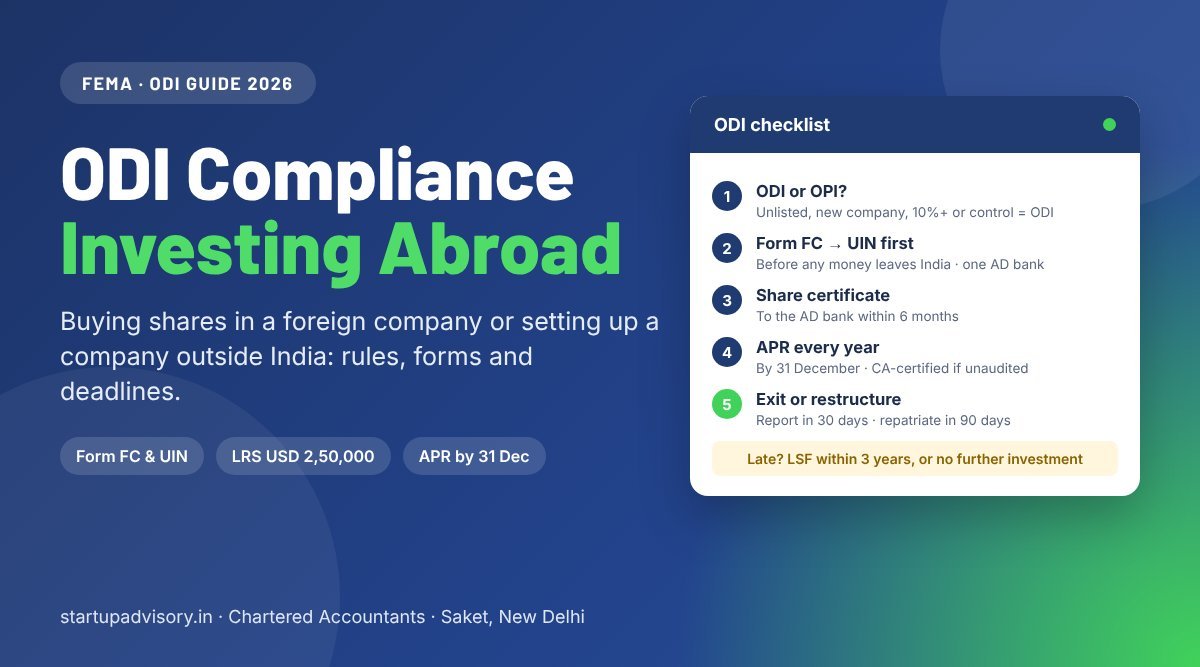
AD Code registration: your bank's Authorised Dealer Code, registered at each customs port where you trade – a one-time step per port.
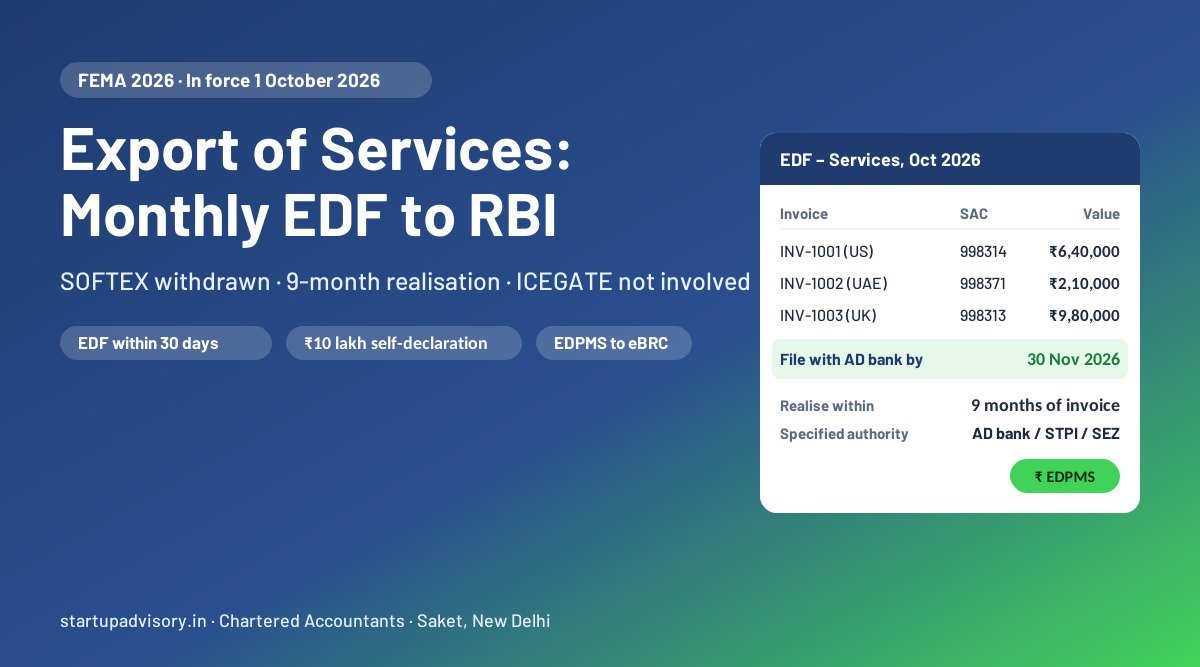
ICEGATE registration: on the customs portal (icegate.gov.in), where shipping bills and bills of entry are filed – set up using your IEC and DSC.
GST registration: needed for input tax credit and GST refunds on exports – see our GST registration service.
IEC is one of the most affordable registrations – here is an indicative breakdown:
| Cost Component | Typical Amount (Delhi) | Notes |
|---|---|---|
| Government Fee | ₹500 | One-time, non-refundable, on DGFT portal |
| Professional Fee | As per package | CA-led preparation & filing |
| Digital Signature (if needed) | ₹1,500 – ₹2,500 | Only for companies / LLPs |
| Annual Update | Free / ₹200 | Free if no change; ₹200 for modifications |
Indicative cost: the IEC government fee is just ₹500, with a small professional fee on top for end-to-end filing. We work on transparent, fixed fees with no hidden charges.
Want a fixed-fee quote?  Call 9311972982 today
Expert CA Team – a clean DGFT application, right the first time
Fast Turnaround – IEC in as little as 1–3 working days
End-to-End Trade Setup – IEC, AD Code, ICEGATE and GST in one place
Annual-Update Reminders – we keep your IEC active year after year
Call Now:- 9311972982
Email:- hello@startupadvisory.in
Or simply Get Free Consultation

Startup Advisory is based in Saket, South Delhi, and handles IEC registration for importers and exporters across the National Capital Region. Because the process is fully online, you can get your Import Export Code without visiting our office. We regularly help clients in:
IEC registration in Delhi & South Delhi (Saket, Hauz Khas, Nehru Place, Connaught Place)
IEC registration in Gurugram (Gurgaon)
IEC registration in Noida & Greater Noida
IEC registration in Ghaziabad
IEC registration in Faridabad
Need an Import Export Code anywhere in Delhi NCR? Talk to our experts on 9311972982

Vishal Singh


Ajay Philip

Pranshu Gaur

Ravish Mehta

Mohit Aggarwal

Sanjeev Sharma

Realtoadvisors

Sakshi Gupta
Rudranath Trip
Yash Rohilla
Sandro Cottus

Azan Hosein Photography
Neetu Yadav
Fresh guides on tax, GST and startup compliance from our CA team.
Share your details — our experts call you back. We use these details only to respond to you. See our Privacy Policy.