
Bookkeeping
GST & TDS Compliance Calendar 2026-27: Due Dates and the New TDS Form Numbers

In short
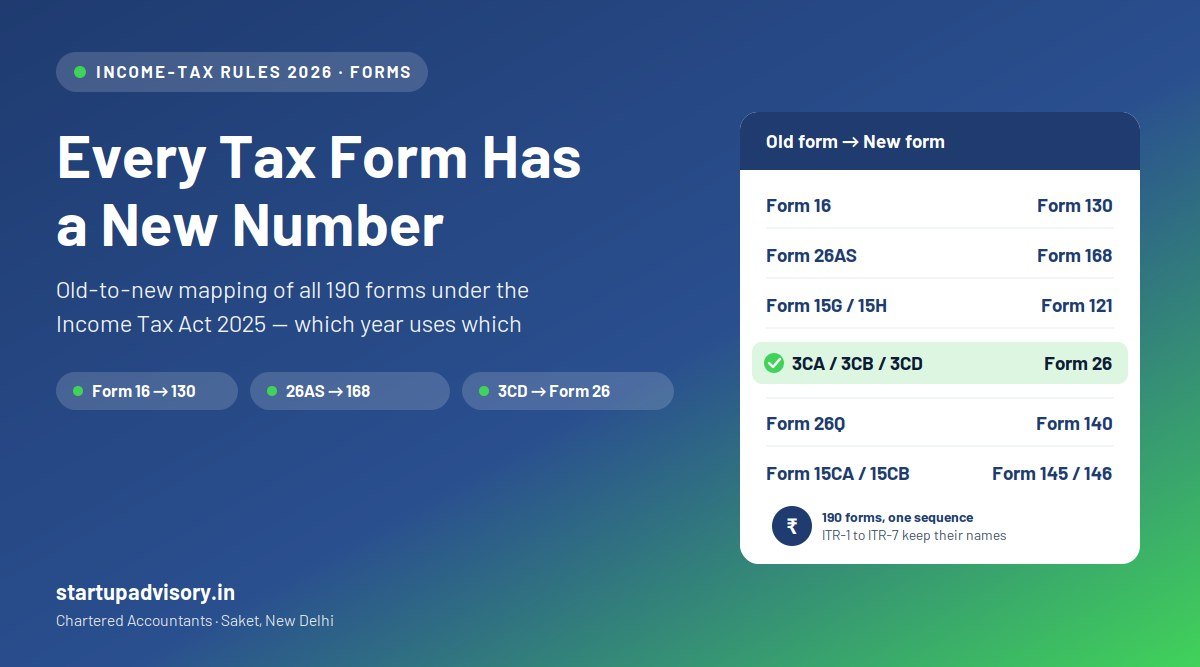
Most businesses repeat the same monthly and quarterly filings: GSTR-1 (sales) around the 11th, GSTR-3B (summary & tax) around the 20th for monthly filers, TDS deposit by the 7th of the next month, and quarterly TDS returns by 31 July, 31 Oct, 31 Jan and 31 May — now on the new Forms 138 / 140 / 144 / 143 for Tax Year 2026-27 under the Income-tax Act, 2025. Companies also track advance tax (Jun/Sep/Dec/Mar) and annual ROC and GST returns. Miss them and you pay late fees, interest and risk losing input tax credit.
Compliance isn't hard — it's just relentless. The same dates come around every month, and a single missed filing can mean late fees and lost input credit. Use this calendar as a working reference for 2026-27.
Monthly GST filings
| Return | What it covers | Typical due date |
|---|---|---|
| GSTR-1 | Outward supplies (sales) | 11th of the next month (monthly filers) |
| GSTR-3B | Summary return & tax payment | 20th of the next month (monthly filers) |
| QRMP (GSTR-3B) | Quarterly small taxpayers | 22nd / 24th after the quarter (state-wise) |
| GSTR-1 / IFF (QRMP) | Quarterly sales return / optional monthly B2B upload | 13th after the quarter / 13th of the next month |
| PMT-06 (QRMP) | Monthly tax payment in the first two months of a quarter | 25th of the next month |
| CMP-08 | Composition scheme payment | 18th after the quarter |
| GSTR-7 / GSTR-8 | GST TDS (government deductors) / TCS (e-commerce operators) | 10th of the next month |
Under the QRMP scheme, smaller taxpayers file GSTR-1 and GSTR-3B quarterly while paying tax monthly — useful for reducing filing frequency.
GST rules that make late filing costlier
- GSTR-3B liability is locked: from the July 2025 tax period the tax liability auto-populated from GSTR-1/1A/IFF cannot be edited in GSTR-3B — fix errors through GSTR-1A before filing.
- Three-year bar: from the July 2025 tax period the portal blocks GSTR-1, 3B, 4, 5, 5A, 8 and 9 filed more than three years after their due date. An old unfiled return can become permanently unfileable.
- E-invoice 30-day limit: businesses with aggregate turnover of ₹10 crore or more must report e-invoices to the IRP within 30 days of the invoice date.
- ITC deadline: input tax credit for FY 2025-26 must be claimed by 30 November 2026.
TDS & TCS deadlines (Tax Year 2026-27)
| Activity | Due date | Form (new / old) |
|---|---|---|
| Deposit of TDS/TCS | 7th of the following month (March: by 30 April) | Challan ITNS 281N / ITNS 281 |
| Quarterly statement — Q1 (Apr–Jun 2026) | 31 July 2026 | TDS salary: Form 138 (24Q) TDS non-salary: Form 140 (26Q) Non-residents: Form 144 (27Q) TCS: Form 143 (27EQ) |
| Quarterly statement — Q2 (Jul–Sep 2026) | 31 October 2026 | |
| Quarterly statement — Q3 (Oct–Dec 2026) | 31 January 2027 | |
| Quarterly statement — Q4 (Jan–Mar 2027) | 31 May 2027 | |
| Non-salary TDS / TCS certificates | Within 15 days of the statement due date (15 Aug, 15 Nov, 15 Feb, 15 Jun) | Form 131 (16A) / Form 133 (27D) |
| Salary TDS certificate | 15 June after the tax year (15 June 2027 for 2026-27) | Form 130 (16) |
TCS statements now share the TDS due dates — Q1 TCS is due 31 July, not the old 15 July. The substance of the TDS provisions (for example old Section 194C, now Section 393) is unchanged; see TDS on contractors under the new Act.
Income-tax & advance tax (companies)
| Activity | Typical due date |
|---|---|
| Advance tax — 1st instalment | 15 June |
| Advance tax — 2nd instalment | 15 September |
| Advance tax — 3rd instalment | 15 December |
| Advance tax — 4th instalment | 15 March |
For income-tax return due dates, see our ITR AY 2026-27 deadlines guide.
Annual filings to remember
- GSTR-9 / 9C — annual GST return (mandatory above ₹2 crore turnover) and reconciliation (above ₹5 crore), due 31 December 2026 for FY 2025-26
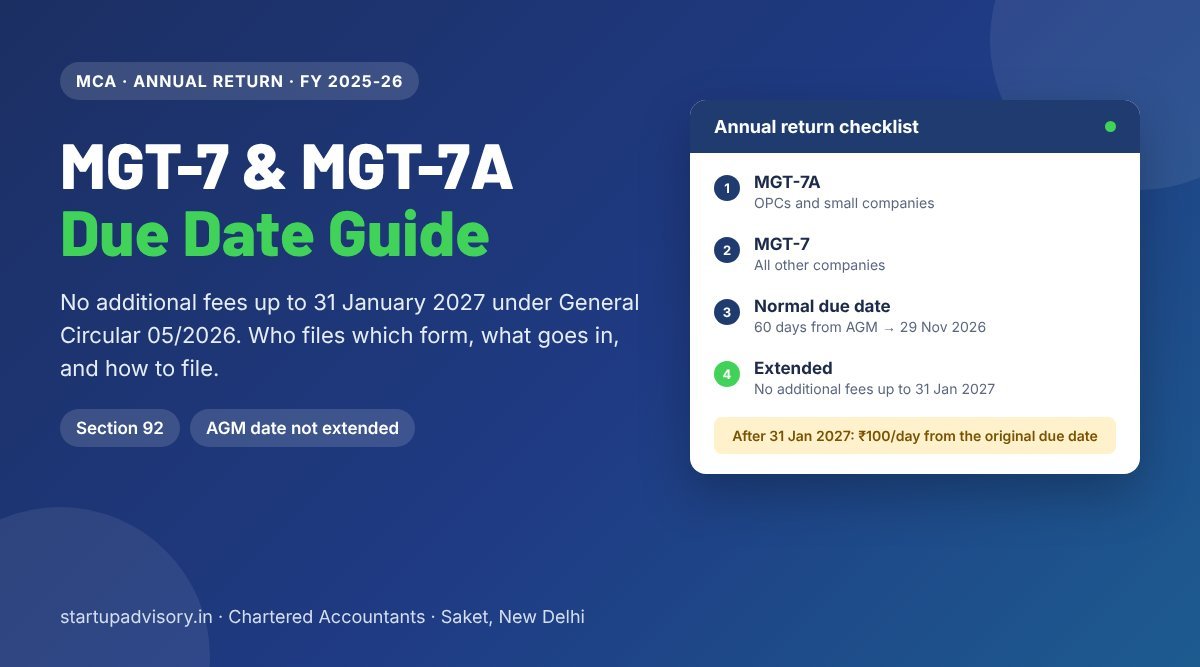
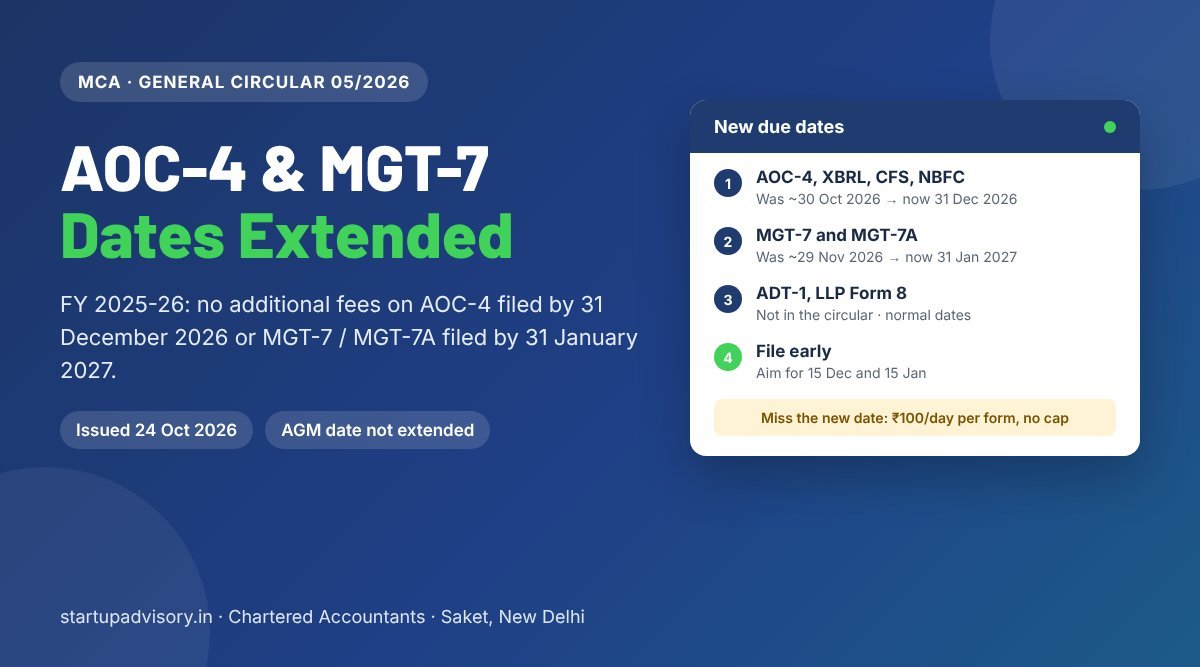
- ROC filings — AOC-4 within 30 days and MGT-7 within 60 days of the AGM; director KYC (DIR-3 KYC) now once every three financial years, by 30 June (ROC calendar)
- GSTR-4 — composition annual return by 30 April; ITC-04 — half-yearly (25 October / 25 April) above ₹5 crore turnover, otherwise annually by 25 April
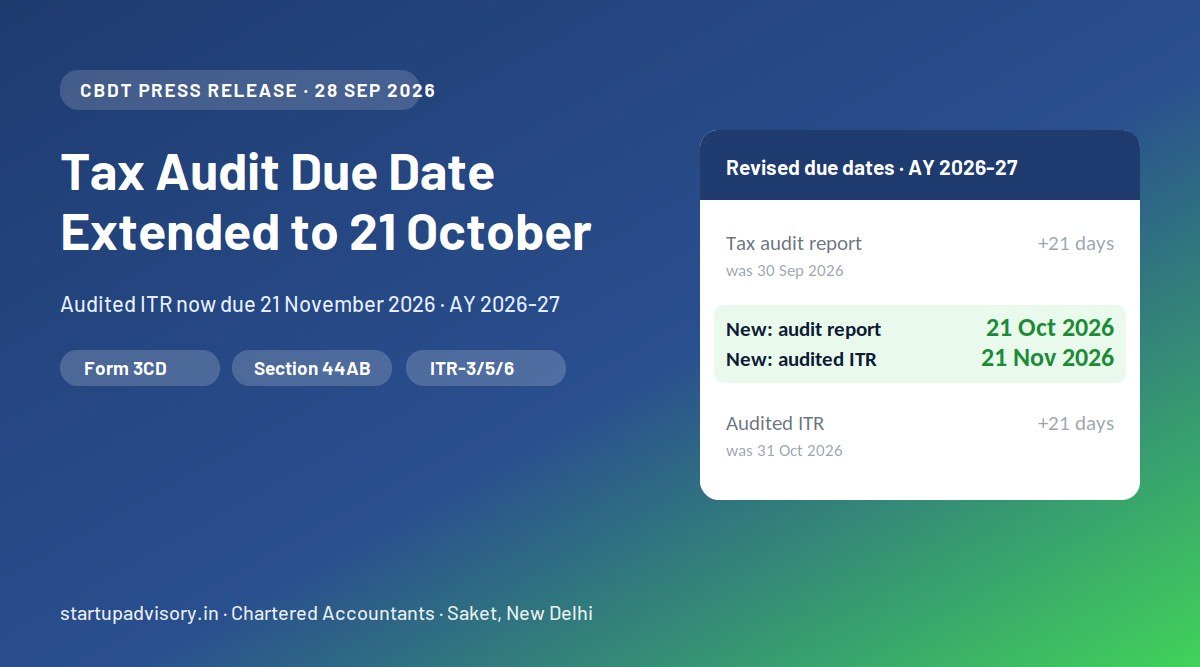
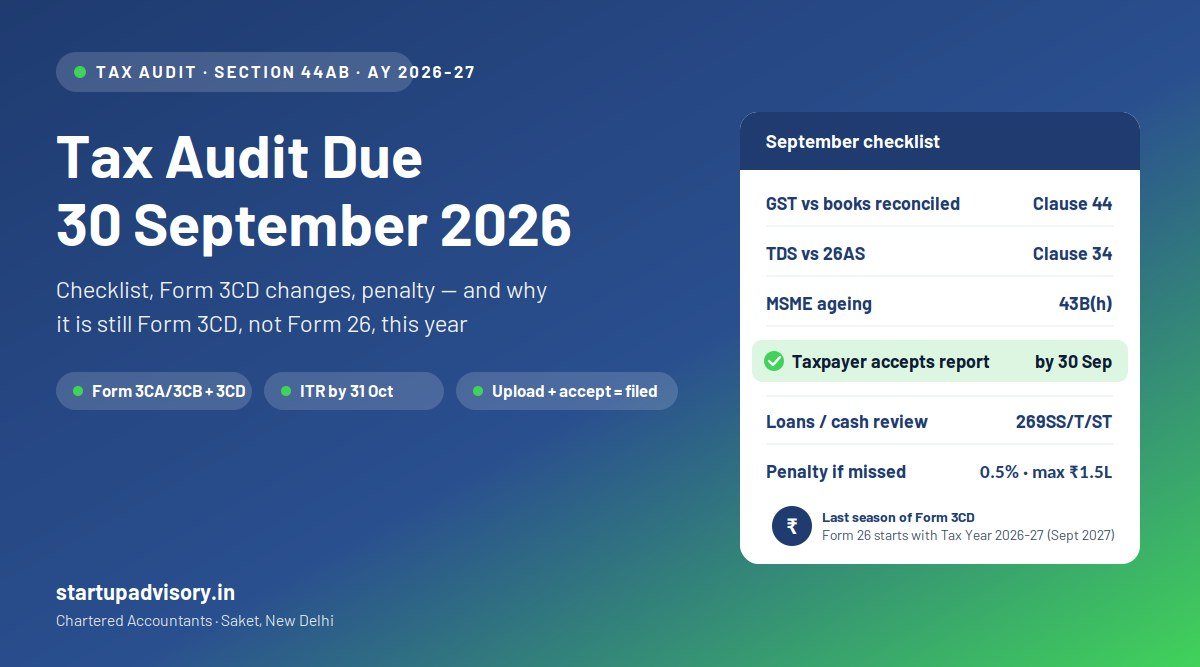
- Income-tax return — AY 2026-27: tax audit report 30 September 2026, audit-case ITR 31 October 2026 (see ITR due dates)
- PF / ESI — monthly payments by the 15th
How to never miss a date
- Maintain a single compliance calendar with reminders a few days ahead
- Reconcile your books monthly so filings are quick and accurate
- Outsource to a bookkeeper who tracks and files for you
Our Saket team manages the full GST/TDS calendar as part of bookkeeping for Delhi NCR businesses, so nothing slips.
Note: due dates can shift via government notifications, vary under QRMP/state rules, and depend on your registrations. Treat this as a general guide and confirm specifics for your business.
How Startup Advisory Can Help
Startup Advisory is a CA-led firm in Saket, New Delhi that keeps businesses across Delhi NCR ahead of every GST and TDS deadline in the calendar. Instead of chasing dates, hand the whole compliance calendar to us:
- Managed GST and TDS return filing — GSTR-1, GSTR-3B, TDS challans and returns, all on time, as part of our bookkeeping service.
- Proactive reminders and reconciliation so you never pay a late fee or interest.
- GST advisory for notices, ITC issues and complex transactions.
- A named expert who owns your compliance calendar.
Call 9311972982 or book a free consultation and stop tracking due dates yourself.