
Tax & ITR
ITR Filing for FY 2025-26 (AY 2026-27): Due Dates, Forms & Penalties

In short
Status on 16 September 2026: the 31 July and 31 August deadlines have passed without extension; the tax audit report (30 September) and audit-case ITR (31 October) are still open. If you missed your date, a belated return is possible until 31 December 2026.
For FY 2025-26 (AY 2026-27), the staggered ITR deadlines are: 31 July 2026 for ITR-1/ITR-2 (salaried, no audit), 31 August 2026 for non-audit business/profession (ITR-3/ITR-4), 31 October 2026 for audit cases, and 30 November 2026 for transfer-pricing cases. Late filing costs Rs. 1,000 (income up to Rs. 5 lakh) or Rs. 5,000 otherwise, plus interest. A belated return can generally be filed up to 31 December 2026.
Filing on time saves you penalties, interest and the loss of valuable benefits like carrying forward losses. Here's everything Delhi taxpayers need for the AY 2026-27 season.
Due dates at a glance (status as of 16 September 2026)
| Taxpayer / form | Due date (AY 2026-27) | Status |
|---|---|---|
| Individuals — ITR-1 / ITR-2 (no audit) | 31 July 2026 | Passed — not extended |
| Non-audit business / profession — ITR-3 / ITR-4 (and partners of non-audited firms) | 31 August 2026 | Passed — not extended |
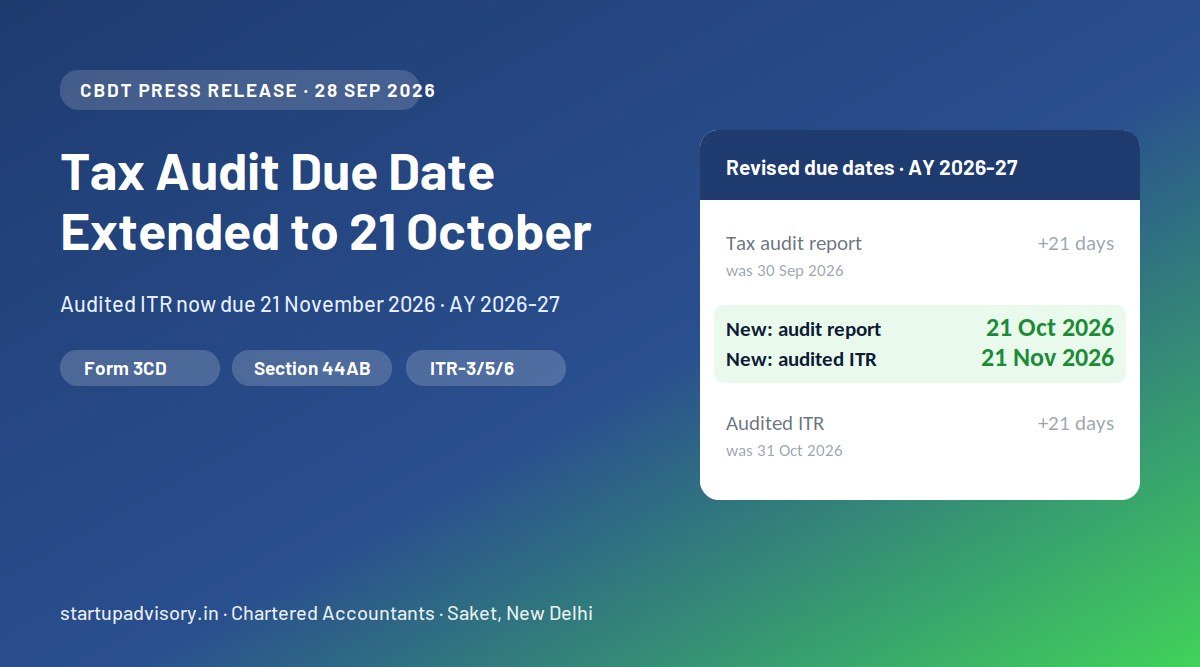
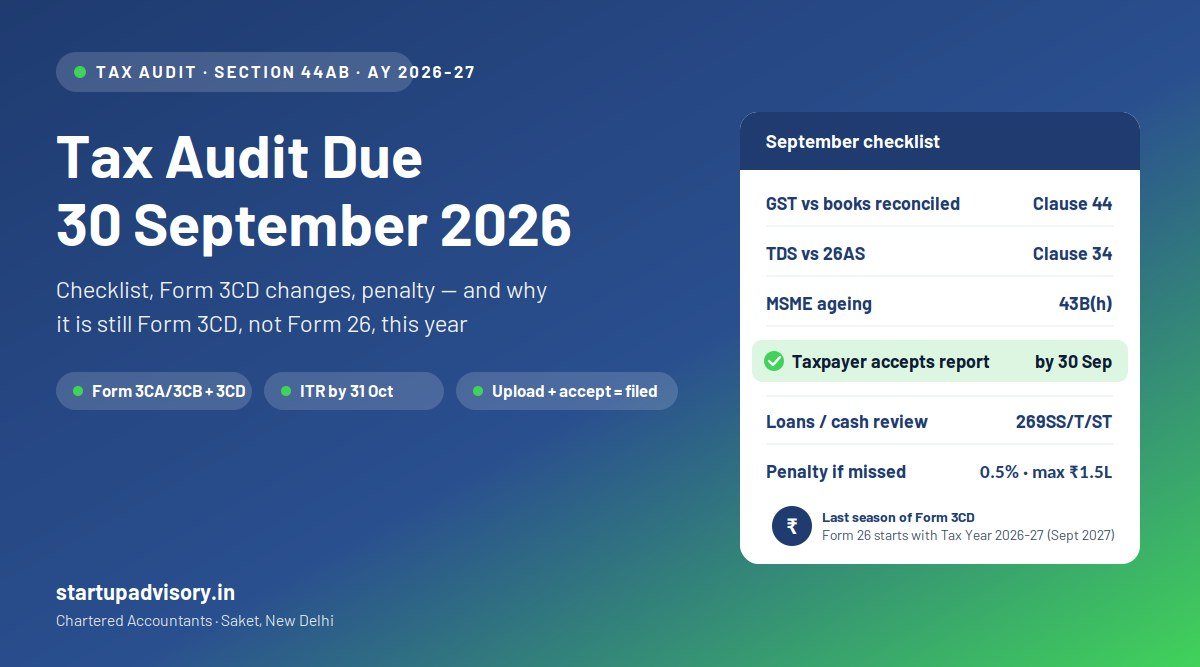
| Tax audit report (Form 3CA/3CB-3CD) | 30 September 2026 | Extended to 21 October 2026 (CBDT, 28 Sep 2026) |
| Audit cases (companies, audited businesses) | 31 October 2026 | Extended to 21 November 2026 (CBDT, 28 Sep 2026) |
| Transfer-pricing cases — Form 3CEB and tax audit report / ITR | 31 October 2026 / 30 November 2026 | Open |
| Belated return | 31 December 2026 | Open |
| Revised return | 31 March 2027 | Open (12-month window, Finance Act 2026) |
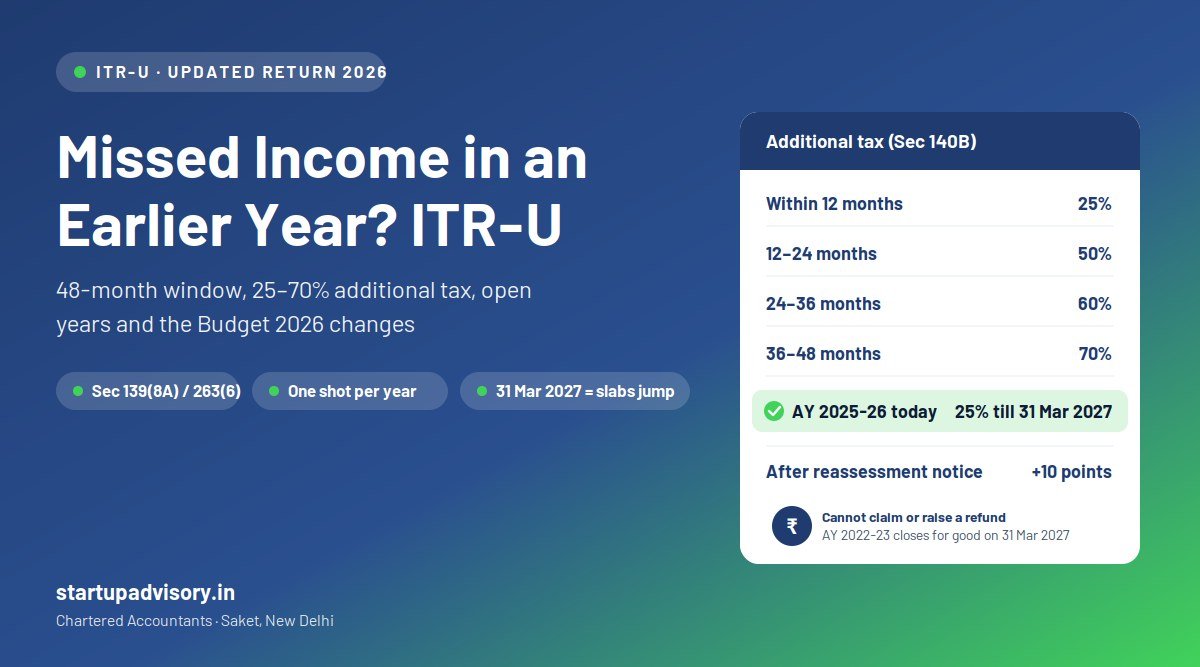
| Updated return (ITR-U) | Up to 48 months from the end of AY 2026-27 | Open, with additional tax |
The 31 August date for non-audit business and professional cases is a permanent statutory change made by the Finance Act, 2026 (amending Explanation 2 to Section 139(1)), not a one-off CBDT extension. Missed your date? Read how to file a belated return. Audit cases: see the tax audit due date checklist.
Which ITR form do you use?
- ITR-1 (Sahaj): resident salaried individuals with simple income (salary, one house property, other sources) within limits
- ITR-2: individuals/HUFs with capital gains, multiple properties or higher income, but no business/profession income
- ITR-3: individuals/HUFs with income from business or profession
- ITR-4 (Sugam): presumptive-taxation cases (44AD/44ADA/44AE) within limits
Companies and LLPs file their own return forms. Freelancers and consultants — see our ITR for freelancers guide.
Penalties for missing the deadline
- Late fee: Rs. 1,000 if total income is up to Rs. 5 lakh; Rs. 5,000 otherwise
- Interest on unpaid tax under the relevant sections
- Lost benefits: you can't carry forward certain losses if you file late
- Delayed refunds and higher scrutiny risk
A note on the new tax law
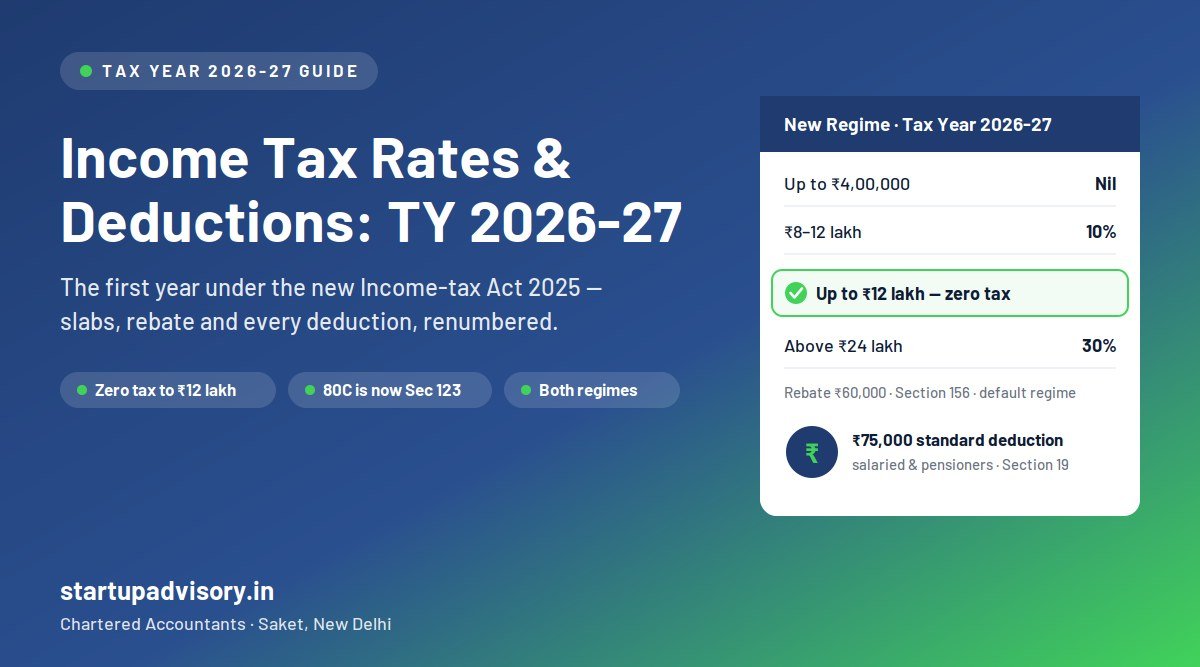
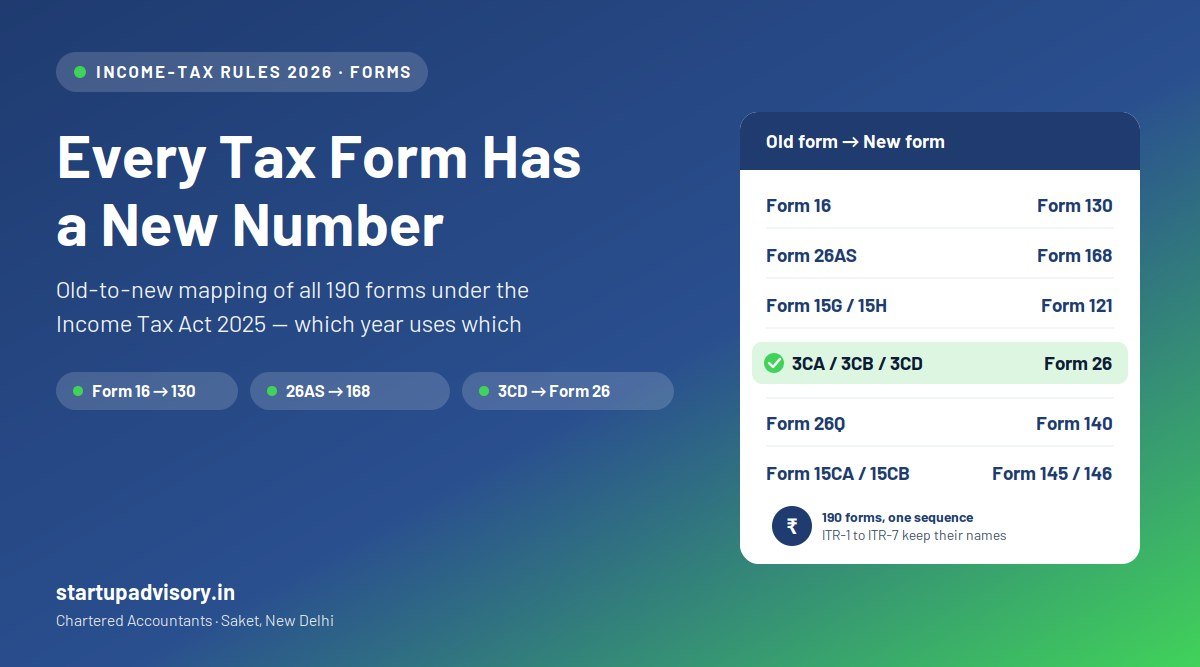
The Income Tax Act 2025 takes effect from 1 April 2026, but your AY 2026-27 return (income earned up to 31 March 2026) is still governed by the existing 1961 provisions. The new Act mainly changes things from the next year onward — see our Income Tax Act 2025 guide.
What to do now
If your audit report or audit-case return is still pending, file well before 30 September / 31 October — the portal slows sharply in the last week. Our Saket team handles ITR filing and tax advisory for individuals, founders and businesses across Delhi NCR.
This is general information, not tax advice. Dates can be extended by CBDT and specifics depend on your situation; confirm before filing.
How Startup Advisory Can Help
Startup Advisory is a CA-led firm in Saket, New Delhi that keeps individuals and businesses across Delhi NCR on the right side of every tax deadline. Missing an ITR due date means interest, late fees and lost loss-carry-forward — we make sure that does not happen:
- Deadline tracking and timely ITR filing and tax advisory for every category of taxpayer.
- Advance-tax and TDS planning so there are no surprises in March.
- Ongoing bookkeeping that keeps your accounts return-ready all year.
- A named CA who reminds you before dates — not after the penalty.
Call 9311972982 or book a free consultation and never miss a filing date again.