
Incentives & Schemes
PMFME Scheme 2026: The 35% Subsidy for Food Processing Units (Window Closes September 2026)
In short
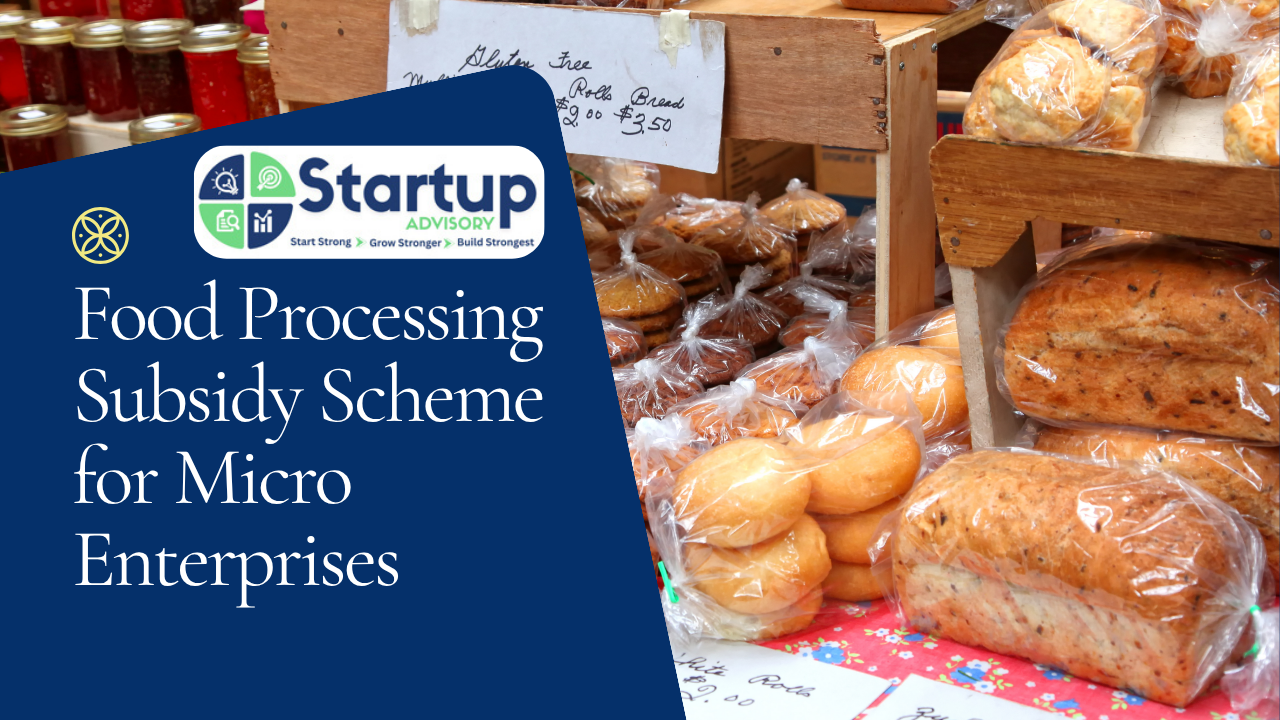
The PM Formalisation of Micro Food Processing Enterprises (PMFME) scheme gives food-processing units a 35% credit-linked capital subsidy, capped at ₹10 lakh per unit — you put in a minimum 10%, a bank funds the rest. SHG members get ₹40,000 seed capital each, and FPOs/SHGs/co-operatives can get 35% up to ₹3 crore for common infrastructure (processing facilities, cold storage, packaging, labs). The catch: the scheme currently runs only till September 2026. A five-year extension with revised guidelines has been proposed, not notified — so if you're eligible, the safe move is to apply inside the current window. Everything hinges on one document: a bankable DPR.
Roughly three-quarters of India's food-processing units operate informally — unregistered, unbranded, and cut off from institutional credit. PMFME exists to pull exactly these units into the formal economy with real money attached. If you run a pickle, spice, namkeen, bakery, dairy, flour, oil or any other food unit in Delhi NCR — or you're planning one — this is the single most relevant subsidy available to you right now.
What PMFME offers: the three components
| Component | Support | Who it's for |
|---|---|---|
| Individual / group micro units | 35% credit-linked capital subsidy, max ₹10 lakh per unit; min 10% own contribution, balance bank loan | Proprietors, partnerships, companies, FPOs, SHGs, co-operatives — new units and upgradation |
| Seed capital for SHGs | ₹40,000 per SHG member in food processing (working capital + small tools), routed through the SHG federation | Self-help group members |
| Common infrastructure | 35% credit-linked grant, max ₹3 crore — common processing facility, lab, warehouse, cold storage, packaging, incubation | FPOs, SHGs, co-operatives, government agencies, private entrepreneurs |
There is also branding-and-marketing support for groups and training through NIFTEM/IIFPT-led capacity building — useful add-ons, but the 35% capital subsidy is the component that changes project economics.
The deadline you cannot ignore
PMFME was launched in 2020 and currently stands extended till September 2026. The Ministry of Food Processing Industries has publicly said it is moving a proposal to continue the scheme for five more years with revised guidelines — including raising the ₹10 lakh subsidy ceiling and preferential treatment for women entrepreneurs. Two honest observations:
- The extension is a proposal, not a notification. Schemes have lapsed before while extensions sat in files.
- Even if extended, revised guidelines can change eligibility and ceilings in either direction.
Our advice: if your project is ready, apply inside the current window. A sanctioned file under known rules beats a hoped-for file under unknown ones.
Who is eligible
Individual units
- Micro food-processing enterprises — proprietorships, partnership firms, private limited companies, NGOs — whether upgrading an existing unit or setting up new capacity.
- The applicant should have ownership rights over the enterprise and the unit should employ fewer than the micro-enterprise thresholds.
- Minimum 10% own contribution; the balance must come as a bank loan (the subsidy is credit-linked — no loan, no subsidy).
FPOs, SHGs and co-operatives (group category)
- Preferably engaged in processing the district's ODOP produce.
- Minimum turnover of ₹1 crore, and the proposed project cost should not exceed current turnover.
- Members should have at least 3 years' experience with the product.
- Internal resources (or state sanction) to fund 10% of project cost plus working-capital margin.
The ODOP angle: preference, not a wall
Every district has a designated One District One Product food item, and the scheme's cluster logic revolves around it. Practically:
- Proposals aligned to your district's ODOP product sail through appraisal more easily and get priority in group/common-infrastructure support.
- Non-ODOP units are not shut out — particularly existing units seeking upgradation — but expect more scrutiny and less handholding.
Check your district's ODOP item on the PMFME portal before finalising the project concept; sometimes a small repositioning of the product line brings a proposal inside the ODOP tent.
The DPR: the document that decides your fate
The Detailed Project Report serves two masters at once — the bank appraising the loan and the authority approving the subsidy. It must credibly cover:
- Project cost break-up: land/building (within permissible limits), plant & machinery with quotations, technical civil works
- Raw-material linkage and capacity utilisation assumptions
- Market assessment and realistic revenue projections
- Financial viability: DSCR, break-even, repayment schedule
- Statutory registrations: FSSAI, Udyam, GST where applicable
Most rejected files share the same disease: template DPRs with numbers that don't reconcile with the applicant's actual bank statements, GST turnover or the machinery quotations attached. Banks notice.
How to apply, step by step
- Step 1 — Register on the official portal, pmfme.mofpi.gov.in, and create your applicant profile.
- Step 2 — Prepare the DPR and gather documents (Aadhaar, PAN, bank details, machinery quotations, premises proof, FSSAI, Udyam).
- Step 3 — Submit online. District Resource Persons (DRPs) are assigned to help applicants; the state nodal agency screens the file.
- Step 4 — Bank appraisal. The file goes to a bank for loan sanction — this is where DPR quality is tested.
- Step 5 — Sanction & subsidy. On sanction and compliance with conditions, the 35% subsidy is credit-linked to the loan account, with a lock-in tied to the unit remaining operational.
After sanction: the part everyone forgets
The subsidy has accounting and tax consequences. A capital subsidy tied to specific assets generally reduces the depreciable cost of those assets rather than landing as taxable income — but the precise treatment depends on structure and the applicable provisions, and getting it wrong distorts both your books and your tax position. Loan covenants, utilisation certificates and the operational lock-in also need tracking. This is standard bookkeeping-plus-CFO territory, and it's where DIY applicants most often stumble after the money arrives.
How Startup Advisory helps you claim PMFME
Our CA-led team in Saket supports food-processing entrepreneurs across Delhi, Gurgaon, Noida, Ghaziabad and Faridabad end to end:
- Eligibility and ODOP mapping — an honest read on whether your project fits, before you spend on it.
- Bankable DPR preparation by chartered accountants, with projections that reconcile to your actual records.
- Registration stack: Udyam, GST and FSSAI coordination so the file is complete first time.
- Bank and DRP follow-through until sanction and disbursement.
- Post-sanction treatment: subsidy accounting, depreciation impact and compliance with lock-in conditions.
With the window closing in September 2026, the realistic lead time for a clean application is now measured in weeks, not months. Call 9311972982 or book a free consultation and we'll assess your project this week.
This article is general information, not financial or legal advice. Scheme terms, ceilings and timelines are set by the Ministry of Food Processing Industries and can change — verify current details on pmfme.mofpi.gov.in before acting.