
Tax & ITR
ITR for Freelancers & Consultants in Delhi: Forms, Deductions & Presumptive Tax

In short
Freelancers and consultants usually choose between two routes: presumptive taxation under Section 44ADA (declare 50% of receipts as income, minimal bookkeeping, file ITR-4), available up to Rs. 50 lakh receipts (Rs. 75 lakh if cash receipts are within 5%); or the actual-expense method (deduct real business costs, keep books, file ITR-3). You'll also need to handle advance tax and possibly GST. Pick the route that gives the lower tax for your situation.
Freelance and consulting income is taxed as "profits and gains of business or profession" — which gives you helpful options most salaried taxpayers don't have. Here's how to get it right.
Two ways to be taxed
Option A: Presumptive taxation (Section 44ADA)
Designed for professionals to keep things simple. You declare 50% of your gross receipts as income and pay tax on that — the other 50% is presumed to be expenses, no detailed books required. It's available up to Rs. 50 lakh in receipts (extended to Rs. 75 lakh where cash receipts are within 5%). You file ITR-4. Great if your actual expenses are below 50% of receipts.
Option B: Actual expenses (regular method)
You maintain books and deduct your real business expenses, paying tax on the net profit. You file ITR-3. Better if your genuine expenses exceed 50% of receipts.
Expenses freelancers can deduct (actual method)
- Laptop, devices and software subscriptions
- Internet and phone bills (business portion)
- Rent for a workspace or home-office portion
- Professional courses, tools and memberships
- Travel and meals for work
- Payments to subcontractors
Keep receipts and clean records — see our bookkeeping basics.
Don't forget advance tax
Unlike salaried employees, no one deducts TDS on most of your income, so you must pay advance tax yourself if your liability crosses the threshold — in instalments by 15 June, 15 September, 15 December and 15 March. Missing these triggers interest.
What about GST?
If your turnover crosses the GST threshold (broadly Rs. 20 lakh for services), you'll need to register and charge GST. See our GST/TDS calendar for the filing rhythm.
New vs old regime for freelancers
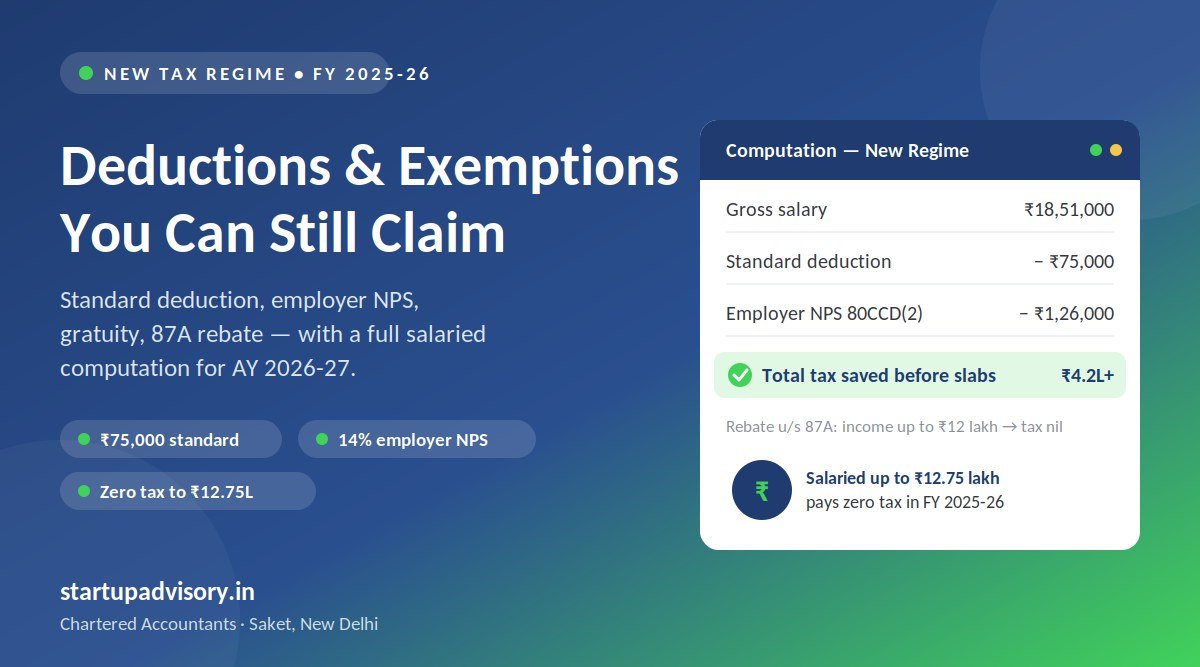
Freelancers can also choose between the new and old tax regimes. With zero tax up to Rs. 12 lakh under the new regime, many will prefer it — but compare both, especially if you have big deductions. See new vs old regime.
The smart move
The biggest savings come from choosing the right method (44ADA vs actual) and regime for your numbers, and paying advance tax on time. Our Saket team files ITRs for freelancers and consultants across Delhi NCR and picks the most tax-efficient route — see ITR Advisory.
General information, not tax advice. Limits and conditions are set by law and can change; confirm for your situation.
How Startup Advisory Can Help
Startup Advisory is a CA-led firm in Saket, New Delhi that specialises in tax for freelancers, consultants and independent professionals across Delhi NCR. Self-employed income, presumptive taxation under 44ADA and advance tax all have traps — we keep you compliant and tax-efficient:
- ITR filing and tax advisory tuned for freelance and professional income, including 44ADA presumptive taxation.
- Advance-tax planning so you are not hit with interest under 234B/234C.
- Simple bookkeeping and GST support for consultants billing Indian and overseas clients.
- A named CA who understands irregular, project-based income — not a one-size-fits-all portal.
Call 9311972982 or book a free consultation and file your freelance return the right way.