
Startup India / DPIIT
Angel Tax Abolished: What It Means for Delhi Startups & Investors in 2026

In short
Angel tax is gone. Section 56(2)(viib) — the provision that taxed startup share premiums above fair market value — was abolished for all classes of investors from FY 2025-26 (1 April 2025) by the Finance Act 2024. New fund raises are no longer hit by it. This is great news for Delhi founders raising capital. One caveat: fund raises before April 2025 can still face scrutiny for those years. And DPIIT recognition still matters — angel-tax relief was just one of its benefits.
For over a decade, "angel tax" was the most feared phrase in Indian startup fundraising. As of 2026, it no longer applies to new rounds. Here's what changed and what it means for raising money in Delhi NCR.
What was angel tax?
Under Section 56(2)(viib), when an unlisted company issued shares to investors at a price above the assessed fair market value, the excess premium was treated as "income from other sources" and taxed at roughly 30%. In practice this meant a startup could be taxed on the very capital raised to build the business — a serious drag on early fundraising.
What changed
The Finance Act 2024 abolished Section 56(2)(viib) for all classes of investors, effective FY 2025-26 (1 April 2025). So for any share issuance from that date, angel tax simply does not apply — whether the investor is a domestic angel, a foreign VC, or anyone else.
Why this is good for Delhi founders
- No tax on capital raised — your funding goes into the business, not the treasury
- Cleaner valuations — no need to defend share premium against a tax officer's FMV view
- Easier foreign investment — a major friction point for FDI into startups is removed
- Fewer disputes — one of the most litigated startup provisions is off the table for new rounds
The one caveat: legacy cases
The abolition applies to new share issuances from FY 2025-26 onward. Fund raises completed before 1 April 2025 can still be examined under the old rules for those assessment years. If you raised earlier rounds and receive a notice, deal with it promptly — the abolition doesn't automatically close older matters.
Does DPIIT recognition still matter?
Absolutely. Angel-tax exemption was historically one reason startups sought DPIIT recognition — but far from the only one. Recognition still unlocks:
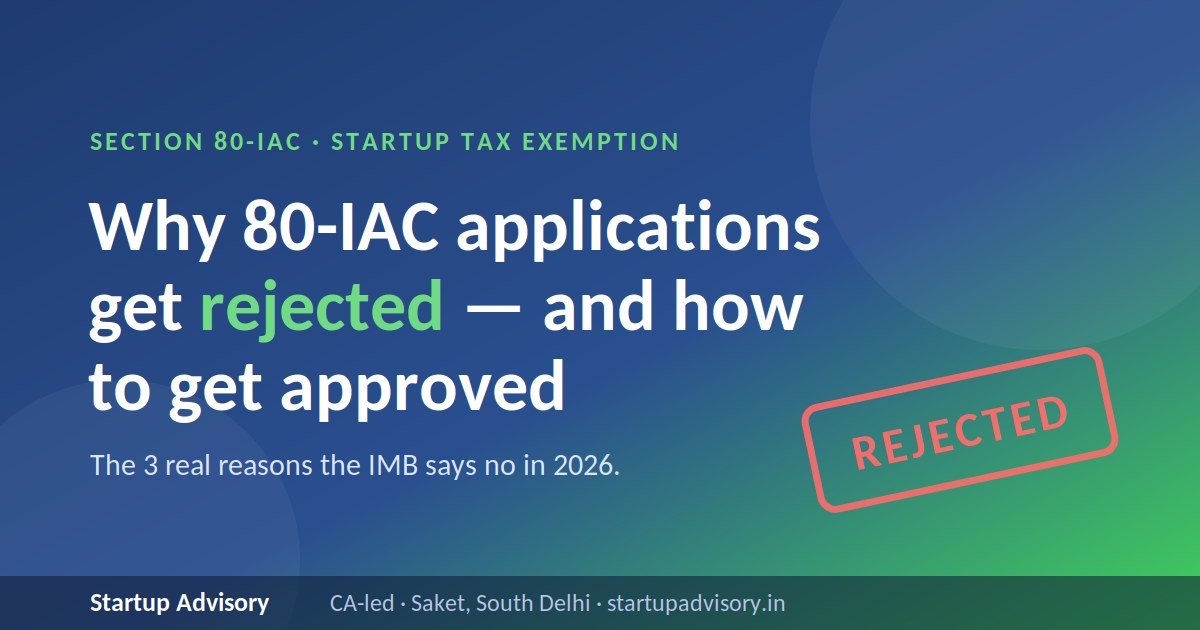
- The Section 80-IAC 100% income-tax holiday
- IPR fast-tracking and big rebates on patent/trademark fees
- Self-certification under select labour and environmental laws
- Public-procurement relaxations and government funding schemes
See the full picture in Startup India benefits beyond tax, and get recognised via our DPIIT registration service.
This article is general information, not tax advice. Provisions are governed by the Income Tax Act and can change; consult an advisor for your specific situation.
How Startup Advisory Can Help
Startup Advisory is a CA-led firm in Saket, New Delhi that helps founders across Delhi NCR set up and recognise their startups so they can use benefits like the abolished angel tax and the 80-IAC holiday. We handle the structure and the paperwork that make those benefits real:
- Company registration (Pvt Ltd) structured for fundraising from day one.
- Startup India (DPIIT) recognition to unlock tax exemptions and easier compliance.
- Guidance on valuation, share premium and funding documentation post the angel-tax repeal.
- A named CA who supports you through every round of investment.
Call 9311972982 or book a free consultation to set your startup up for funding.