
Company Registration
How to Register a Startup in Delhi in 2026: A Step-by-Step Guide

In short
To register a startup in Delhi, pick a legal structure (most founders choose a Private Limited Company), obtain Digital Signatures and Director Identification, reserve a name, and file the SPICe+ form with the MCA — which also issues PAN, TAN and the Certificate of Incorporation. After incorporation, you can apply for DPIIT recognition under Startup India to unlock tax and compliance benefits, then complete GST and bank-account setup. End to end, incorporation usually takes about 5–7 working days, with DPIIT recognition following within a few more days.
Delhi NCR is one of India's most active startup hubs — but the paperwork around launching a company can feel heavier than the idea itself. This guide walks through the full registration journey in plain English, in the order you'll actually do it, so you can launch a compliant business without guesswork.
Step 1: Choose the right business structure
Your structure decides your compliance load, how easily you can raise funding, and how you're taxed. The four common choices for Delhi founders are:
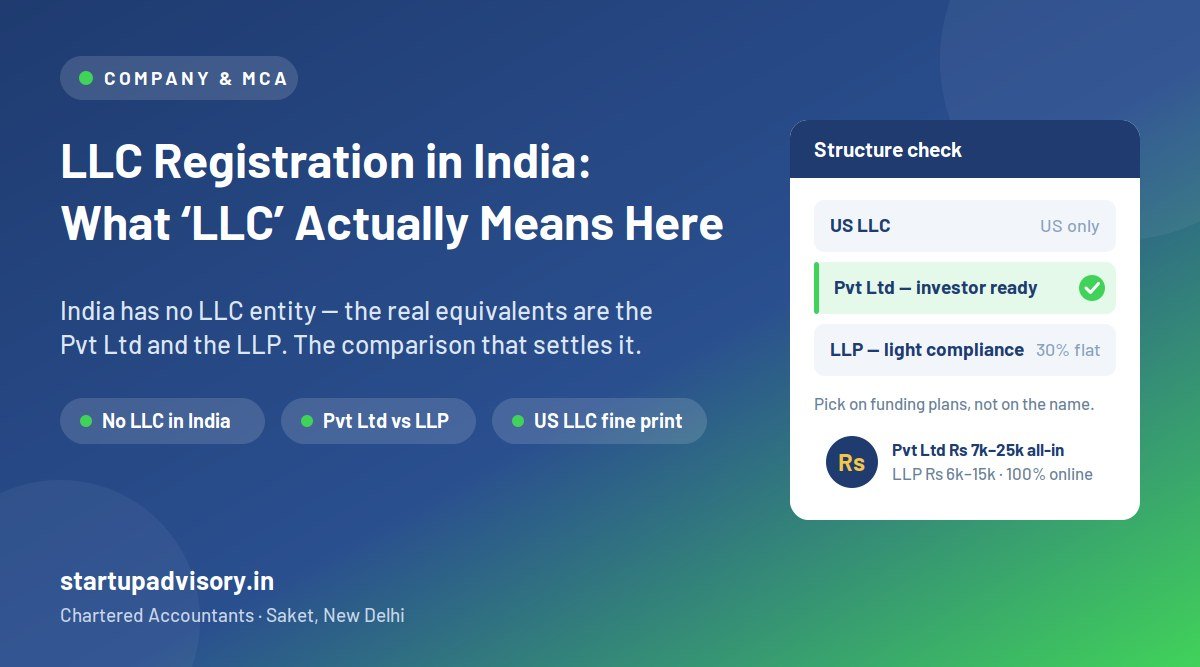
- Private Limited Company (Pvt Ltd): The default for startups that plan to raise investment. Limited liability, separate legal identity, and the structure investors expect. Requires at least two directors and two shareholders.
- One Person Company (OPC): For a solo founder who wants limited liability without a second member. Simple to run, but converts to Pvt Ltd once it crosses certain thresholds.
- Limited Liability Partnership (LLP): Lower compliance and good for services or bootstrapped ventures, but less suited to equity fundraising.
- Sole Proprietorship: Easiest to start, but offers no liability protection and limited credibility with investors and banks.
If you intend to raise external capital, a Private Limited Company is almost always the right call.
Step 2: The registration process, step by step
Get Digital Signature Certificates (DSC)
Every proposed director needs a DSC to sign electronic forms with the MCA. This is the first practical step.
Apply for Director Identification Number (DIN)
The DIN identifies each director. For new companies it's applied for within the incorporation form itself.
Reserve your company name
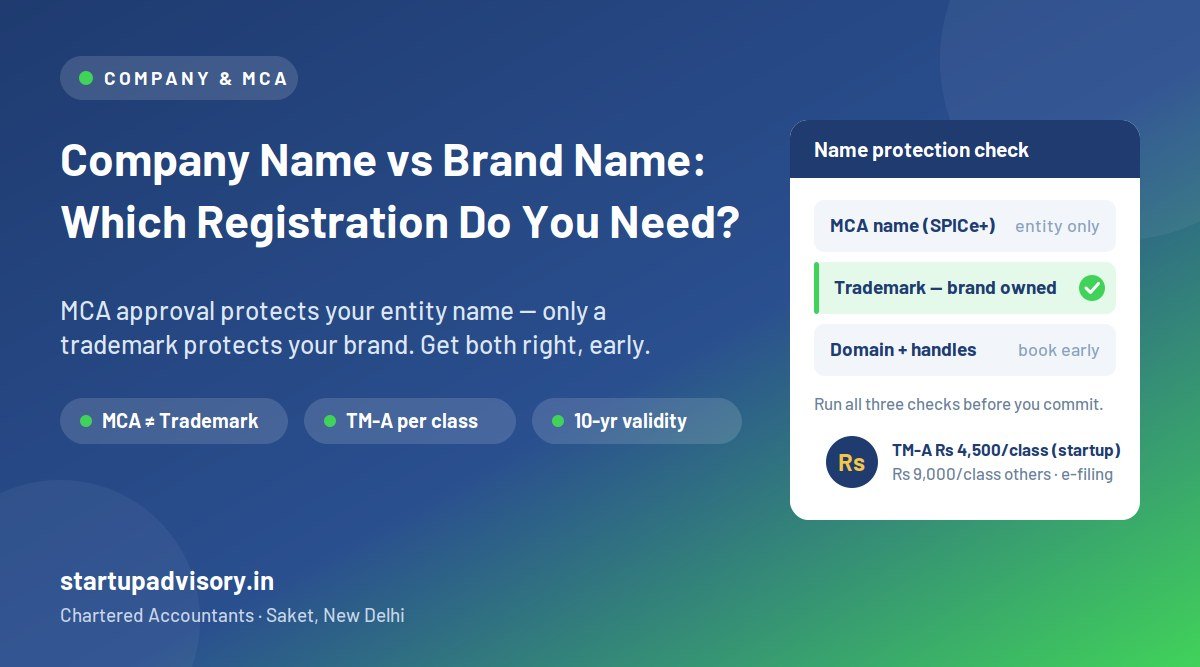
Propose a unique name through the MCA portal. Have a backup ready — names too similar to existing companies or trademarks get rejected.
File SPICe+ (the all-in-one form)
SPICe+ bundles incorporation with PAN, TAN, EPFO, ESIC and a bank-account request. You'll submit the MoA, AoA, registered-office proof and director KYC here.
Receive your Certificate of Incorporation
Once approved, the MCA issues your Certificate of Incorporation along with PAN and TAN. Your company now legally exists.
Step 3: Documents you'll need
- PAN and Aadhaar of all directors/shareholders
- Passport-size photographs and ID/address proof (passport, voter ID or driving licence)
- Registered office proof — a recent utility bill plus a no-objection certificate from the owner (a home address is acceptable)
- Email IDs and mobile numbers linked to each director for OTP verification
Step 4: Get DPIIT Startup India recognition
This step is optional but valuable. DPIIT recognition under the Startup India scheme is separate from company registration and is done after incorporation. It can unlock:
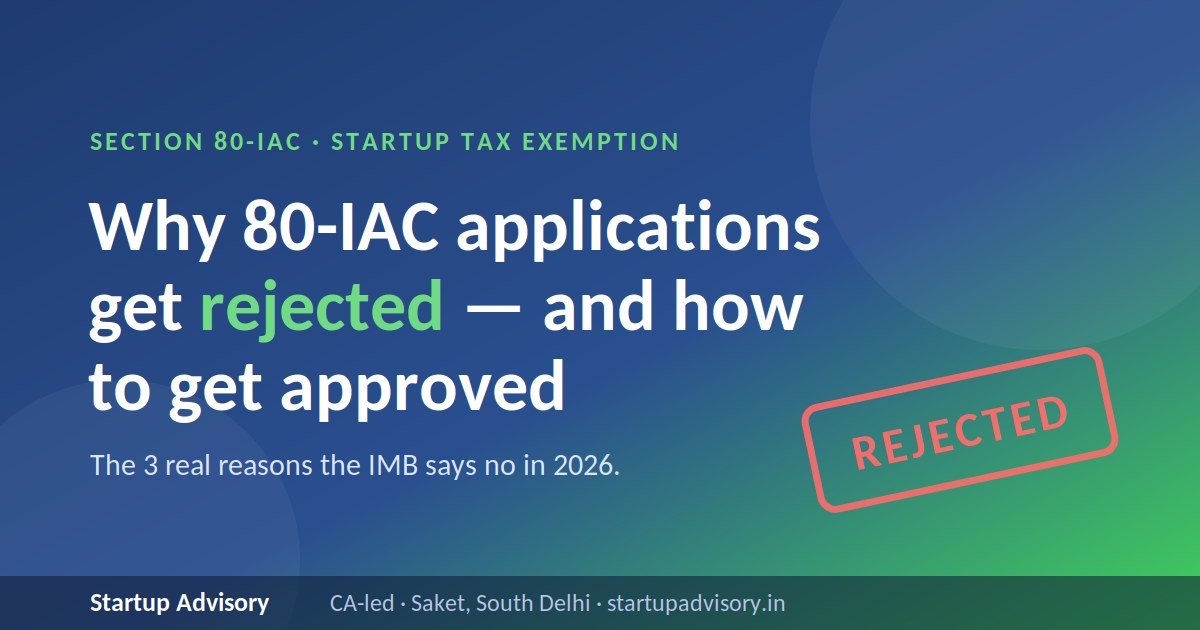
- Eligibility for the income-tax exemption for eligible startups (the 80-IAC tax holiday)
- Self-certification under select labour and environmental laws
- Easier access to government tenders and certain funding schemes
- Faster, lower-cost intellectual-property filings
You can read more on our Startup India DPIIT Registration page.
Step 5: Your first compliances after incorporation
Registration is the start, not the finish line. Within the first few weeks you'll usually need to:
- Open a current account in the company's name
- Register for GST if your turnover or business type requires it
- Set up bookkeeping so your accounts stay clean from day one
- Track statutory due dates — board meetings, ROC filings and tax returns
How long does it take and what does it cost?
For a Private Limited Company with documents ready, incorporation typically completes in about 5–7 working days. Costs vary with authorised capital, professional fees and government charges — so the most reliable way to budget is a quick consultation rather than a generic figure online.
Registering in Delhi NCR is very doable on your own, but small errors — a rejected name, a mismatched address proof, the wrong structure — cost weeks. If you'd rather get it right the first time, our Saket-based team handles the entire process end to end.
How Startup Advisory Can Help
Startup Advisory is a CA-led firm based in Saket, New Delhi that helps founders register and run businesses across Delhi NCR — Delhi, Gurugram (Gurgaon), Noida, Ghaziabad and Faridabad. If you would rather not navigate SPICe+, DPIIT and your first GST filing alone, we handle the whole journey for you:
- End-to-end company registration — Pvt Ltd, OPC or LLP — in about 5–7 working days, 100% online.
- Startup India (DPIIT) recognition and Section 80-IAC tax-exemption filing.
- GST registration and ongoing bookkeeping so your compliance is clean from day one.
- A named Chartered Accountant who owns your file — not a ticket queue.
Call 9311972982 or book a free consultation and we will map out the fastest compliant route for your startup.