
Tax & Compliance
VAT Applicability and Registration in India in the GST Era
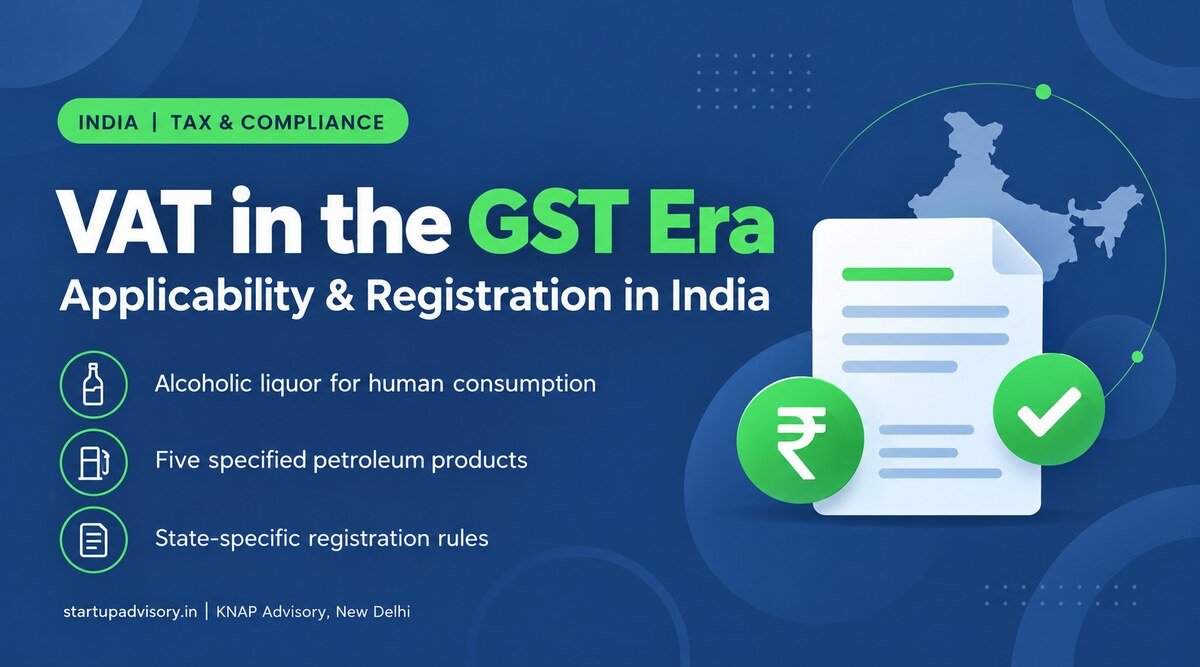
Most founders now ask about a GSTIN, not a VAT number. That is usually the correct starting point for a company selling ordinary goods or providing services. It is not the whole answer for a fuel dealer, liquor retailer or bar. Even a business already registered under GST can have a separate state VAT obligation.
This guide explains the distinction, the businesses that should review VAT registration, and the documents and compliance questions to prepare. It does not prescribe a single rate or turnover threshold for every state: those figures must be checked for the particular goods and location.
1. What changed when GST replaced the earlier tax system?
Before GST, state VAT was a major tax on sales of goods within a state, alongside central excise, service tax and other levies. GST brought most taxable supplies of goods and services into a common framework. Depending on the transaction, businesses generally account for CGST and SGST/UTGST, or IGST.
The exceptions are built into the law. Article 366(12A) of the Constitution excludes taxes on the supply of alcoholic liquor for human consumption from the definition of GST. Section 9(1) of the CGST Act reflects that exclusion. For the five specified petroleum products, Section 9(2) postpones the GST levy until a date notified on the GST Council’s recommendation.
Amended State List Entry 54 preserves state taxing power over sales of those specified goods, subject to its constitutional limitations. That is why VAT or sales tax can continue alongside GST without being a duplicate registration for exactly the same tax.
2. Where is VAT still relevant?
| Goods or activity | GST/VAT position to examine | Practical point |
|---|---|---|
| Alcoholic liquor for human consumption | Outside GST; state VAT/sales tax and excise rules may apply | Liquor licensing and VAT registration are separate requirements |
| Petroleum crude | Specified petroleum product with deferred GST levy | Check the applicable state law and transaction |
| High-speed diesel | Specified petroleum product with deferred GST levy | VAT charged on fuel is not GST input tax credit |
| Motor spirit, commonly known as petrol | Specified petroleum product with deferred GST levy | Do not substitute a GST rate for the applicable state levy |
| Natural gas | Specified petroleum product with deferred GST levy | Distinguish the commodity from separately supplied taxable services |
| Aviation turbine fuel (ATF) | Specified petroleum product with deferred GST levy | Check state-specific rates, conditions and concessions |
| Most other goods and taxable services | Normally assessed under GST | VAT registration is not an additional universal requirement |
Electricity also requires a separate analysis of GST exemption and state electricity-duty rules. It should not simply be added to the list of goods requiring VAT registration. An exemption under GST, exclusion from GST and a liability under state VAT are different legal concepts.
3. Which businesses should review VAT registration?
- Liquor retailers, wholesalers and distributors: review the state sales-tax provisions as well as excise licensing.
- Restaurants, hotels and bars serving liquor: examine the liquor sales separately from food, accommodation and other services.
- Petrol pumps and dealers in the specified fuels: review registration for the fuel activity and any separate GST supplies.
- Manufacturers, traders or importers dealing in the specified goods: consider the registration triggers for their particular transactions and locations.
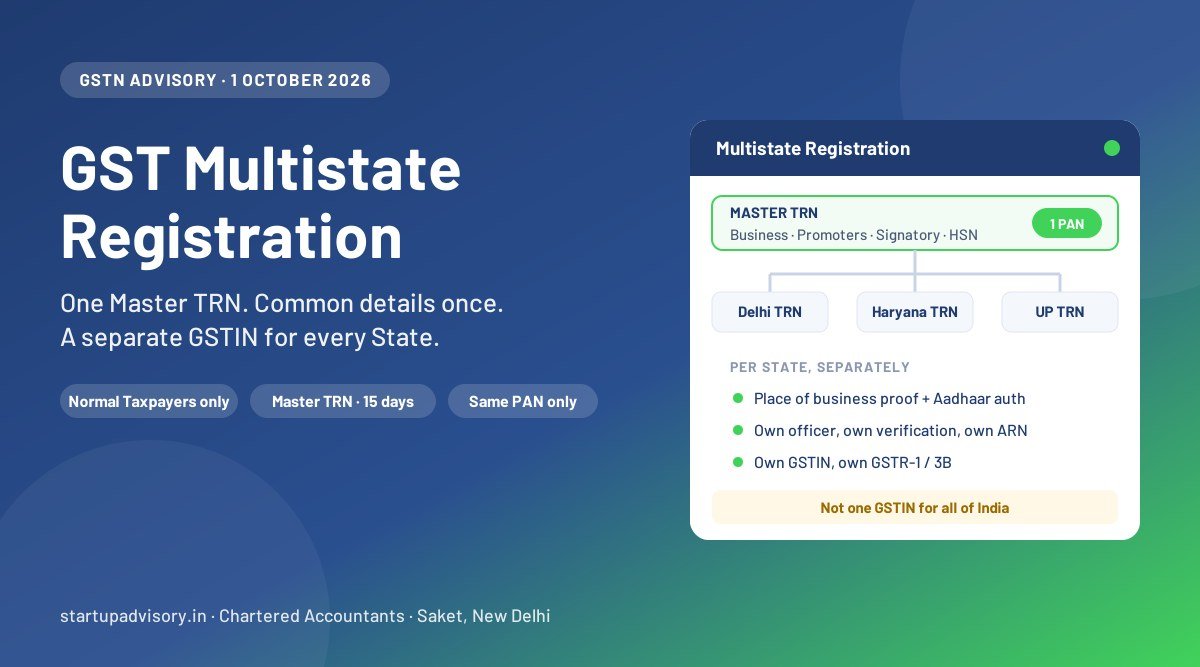
- Businesses operating across states: assess each establishment and transaction under the relevant state law rather than assuming one VAT registration covers India.
A consultancy, software business or ordinary trading startup does not need VAT registration just because VAT still exists. If its supplies fall only within GST, the relevant question is GST registration and compliance. Conversely, incorporation under the Companies Act or possession of a GSTIN does not discharge a separate VAT obligation.
4. When is VAT registration compulsory?
Start with the applicable state statute and current rules. Ask whether the business is a dealer liable to register, how taxable turnover is calculated, which goods are covered and whether a special registration trigger applies. A turnover threshold may be relevant, but it is not necessarily the only trigger.
There is no single nationwide VAT registration limit. Do not copy a GST threshold into a VAT application, rely on a pre-2017 web page or assume that a rule in Delhi applies unchanged in Maharashtra, Haryana or another state. Rates, thresholds, compulsory-registration provisions, voluntary registration and security requirements need state-specific verification.
For Delhi NCR businesses, the relevant jurisdictions include Delhi, Haryana and Uttar Pradesh. The answer depends on the place of business and the transaction, not the address of the consultant who files the application.
5. VAT registration: a practical step-by-step process
- Identify the goods and jurisdiction. Prepare a product list, business model, premises details and proposed sales channels. Separate GST supplies from the goods requiring a VAT review.
- Confirm the statutory trigger. Check the current state VAT/sales-tax legislation, registration rules and relevant departmental notices. Identify the deadline rather than applying after sales have already created a default.
- Use the official state process. Apply through the Commercial Taxes or Trade and Taxes department’s current portal or prescribed route. Do not assume that the GST registration portal grants VAT registration.
- Submit the prescribed information. Provide the entity, responsible persons, premises, bank and activity details required by the state. Pay a fee or furnish security only where applicable.
- Complete verification. Respond to clarification requests and any premises or document checks. Retain the application acknowledgement and evidence of submissions.
- Check the certificate. Verify the registered entity, premises, covered activity, registration number and effective date. Set up the tax and return workflow from that date.
This is a common preparation framework, not a guarantee that every state uses identical forms, approval timelines or fees. Where a state portal is unavailable or its checklist is unclear, confirm the current route with the department before submitting.
6. Documents to prepare
The final checklist comes from the state department. The following records are commonly useful when preparing an application:
| Category | Records to have ready |
|---|---|
| Business identity | PAN and constitution documents: incorporation certificate, partnership deed or other applicable evidence |
| Responsible persons | Identity, address and authorisation details of proprietor, partners, directors or authorised signatory, as prescribed |
| Business premises | Ownership or lease evidence, address proof and any required consent/NOC |
| Bank and operations | Bank details, business activity description, goods list and turnover information |
| Sector permissions | Liquor/excise or other activity-specific permissions where applicable |
| Additional requirements | Prescribed declarations, photographs, fee/security or other documents requested under the state rules |
Aadhaar, a digital signature, an NOC or security deposit should not be described as mandatory for every application without checking the specific requirements.
7. Can VAT and GST registrations coexist?
Yes. A business may make different supplies governed by different tax systems. Keep those supplies distinguishable in the sales ledger, invoice configuration, tax accounts and returns.
Example: a restaurant serving liquor. Food and restaurant services require GST analysis; alcoholic liquor for human consumption requires the applicable state VAT/sales-tax and excise analysis. Separate identification of the charges is important. A GSTIN alone does not authorise liquor trading or satisfy the state VAT requirement.
Example: a fuel outlet with a convenience store. Petrol and diesel follow their applicable tax framework, while many shop goods may fall under GST. Analyse each product rather than applying the fuel treatment to the entire outlet.
Composite arrangements, bundled charges and common expenses can create allocation questions. Review the contract and invoice substance before deciding how to split values or credits.
8. VAT credit is not GST input tax credit
State VAT paid on petrol or diesel cannot be claimed as GST ITC. It is not CGST, SGST/UTGST or IGST. A VAT number also does not create a right to credit every purchase: any credit within the VAT system depends on the state law, eligible goods, use and documentation.
A mixed business should separately review GST credit attributable to taxable supplies and credit attributable to non-taxable supplies. Common-credit reversals may be relevant under the GST rules. Keep a defensible allocation method and supporting purchase records.
A legacy VAT balance from before GST is a different issue again. It cannot simply be entered into a current GST return; transitional credit, assessment and litigation questions need their own legal review.
9. Interstate sales and imports need a separate review
For specified goods remaining outside GST, the Central Sales Tax framework can still be relevant to interstate transactions. Do not automatically apply IGST because goods cross a state border. Examine whether the transaction is an interstate sale, a stock transfer or another movement and whether declarations and their conditions are applicable.
An import from outside India raises customs questions as well as any later domestic supply. Customs registration, GST registration and state VAT registration should not be treated as interchangeable.
10. Compliance after registration
- Issue the invoices and maintain the records required by the applicable state law.
- Track VAT payments and returns using the correct state-specific periods and deadlines.
- Reconcile taxable sales, purchases, permitted credits and payments.
- Update registration details when premises, constitution or other particulars change.
- Review cancellation when the covered activity genuinely stops; do not assume that a GST cancellation cancels VAT.
- Maintain separate GST, VAT and excise compliance records where multiple regimes apply.
Common mistakes to avoid
The most frequent mistakes are assuming GST abolished all VAT; using one state’s threshold for another; claiming VAT on fuel as GST ITC; treating every alcohol or petroleum-related product alike; and assuming an old TIN or migration to GST means there are no pending VAT returns, assessments or cancellation requirements.
The reliable approach is a product-by-product and state-by-state review. Check current official provisions before setting an invoice rate or deciding registration is unnecessary.
How Startup Advisory can help
Our Saket team can help identify which tax framework applies to your business, review state registration requirements, organise supporting records and coordinate VAT/GST compliance. Explore our GST advisory, GST registration and bookkeeping services. Contact us or call 9311972982 with your state, product list and business model.
Official sources and scope
- Constitution (One Hundred and First Amendment) Act, 2016: Article 366(12A), Article 279A and amended State List Entry 54.
- GST Council: Central GST legislation, including the CGST Act, Section 9 and amendments. Read the original Act alongside subsequent changes.
- CBIC: GST—An Update (1 June 2019), used for the historical framework, not as a source of current state rates or thresholds.
Prepared 14 October 2026. This article explains the general VAT/GST distinction and a registration preparation framework. It does not certify any particular state’s current rates, thresholds, fees or approval timeline. Obtain the applicable state’s latest legislation and instructions for your goods and circumstances before filing or charging tax.