
Income Tax / ITR
Missed the 31 July 2026 ITR Deadline? Your Complete Belated Return Guide (AY 2026-27)
In short
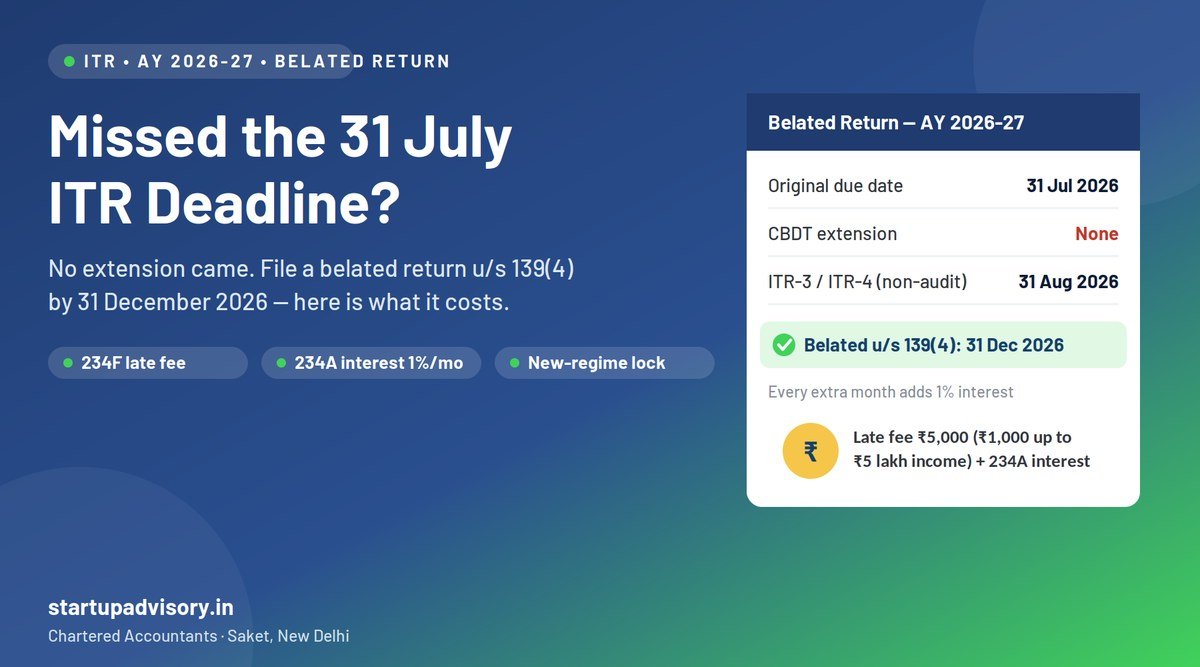
The 31 July 2026 due date for salaried and other non-audit ITR-1/ITR-2 taxpayers has passed and CBDT announced no extension. Two things to check immediately: (1) you may not actually be late — under the Finance Act 2026, non-audit taxpayers with business or professional income (ITR-3/ITR-4) have until 31 August 2026; and (2) if you are late, file a belated return under Section 139(4) by 31 December 2026. Filing late costs a Section 234F fee of ₹5,000 (₹1,000 if total income is up to ₹5 lakh), interest under Section 234A at 1% per month on unpaid tax, the loss of business/capital loss carry-forward, and — the one most people miss — the old tax regime option lapses: a belated return is filed under the default new regime. Every extra month adds interest, so file now, not in December.
The first week of August is when the calls start: "The deadline passed — am I in trouble? Will they extend it?" For AY 2026-27 the answer to the second question is now clear: no extension was announced, unlike the previous two years. Over 5.5 crore returns were filed in the official window; if yours was not among them, here is exactly where you stand and what it costs.
First: was 31 July even your deadline?
Budget 2026 quietly split the individual due date, and a lot of "late" filers are not actually late:
| Taxpayer | Due date (AY 2026-27) | Status |
|---|---|---|
| Salaried / other non-audit — ITR-1 / ITR-2 | 31 July 2026 | Passed, not extended |
| Non-audit business / profession — ITR-3 / ITR-4 | 31 August 2026 | Passed, no extension notified |
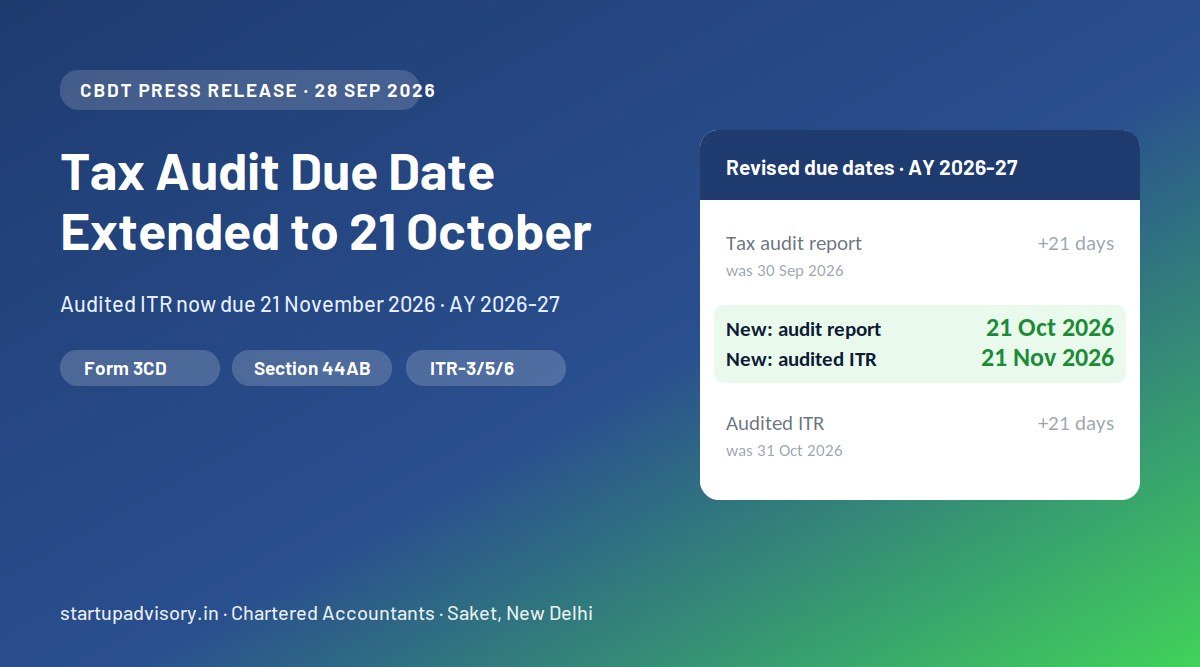
| Tax audit report (Sec 44AB) | 30 September 2026 | Open |
| Audit cases | 31 October 2026 | Open |
| Transfer-pricing cases | 30 November 2026 | Open |
| Belated / revised return | 31 Dec 2026 / 31 Mar 2027 | Open |
So a freelancer, consultant or small business owner filing ITR-3 or ITR-4 without audit still has until 31 August 2026 — on time, no fee, no interest under 234A, full regime choice intact. If that is you, stop reading this article and go file. Our full AY 2026-27 due-date guide covers every category.
If you are genuinely late: the belated return under Section 139(4)
A belated return is the same return, filed on the same portal, in the same form — just after the due date, under Section 139(4) instead of 139(1). For AY 2026-27 it can be filed up to 31 December 2026. You can still claim your TDS credits and your refund in it. What changes is the price tag.
What filing late costs you
1. The Section 234F late fee
- ₹5,000 if your total income exceeds ₹5 lakh
- ₹1,000 if your total income is up to ₹5 lakh
- Generally no fee if your income is below the basic exemption limit and no tax is payable — though filing may still be mandatory in certain cases (foreign assets, high-value transactions), and required if you want your refund
2. Interest under Section 234A
If any tax remains unpaid, interest runs at 1% per month or part of a month from 1 August 2026 until you pay and file. This is on top of any 234B/234C interest for advance-tax shortfalls. The practical takeaway: even one day into a new month adds a full month's interest — filing in early August is materially cheaper than filing in December.
3. Lost loss carry-forward
A belated filer cannot carry forward business losses or capital losses to set off against future income. The main exceptions: loss from house property and unabsorbed depreciation can still be carried forward. If you booked capital losses in FY 2025-26 hoping to set them off against future gains, missing the due date has already cost you that — for everything except the exceptions above.
4. The new-regime lock (the one nobody budgets for)
Under Section 115BAC, the new regime is the default, and the option to be taxed under the old regime must be exercised in a return filed by the Section 139(1) due date (for business income, via Form 10-IEA filed by that date). A belated return is therefore processed under the new regime — even if your 80C, 80D, HRA and home-loan deductions would have made the old regime cheaper. For heavily-deducted taxpayers this can dwarf the ₹5,000 fee.
5. Slower refunds
Belated returns enter the processing queue later, and interest on refunds under Section 244A is computed less favourably when the delay is attributable to you.
How to file the belated return (step by step)
- Reconcile first: download your AIS/TIS and Form 26AS, match TDS and reported transactions — mismatches are the top trigger for notices on late returns.
- Compute and pay self-assessment tax now: paying stops the 234A meter even before you file.
- File on the e-filing portal in the applicable ITR form, selecting Section 139(4) as the filing section.
- Pay the 234F fee as part of the self-assessment tax challan.
- e-Verify within 30 days (Aadhaar OTP, net banking or EVC) — an unverified return is treated as never filed, which puts you right back where you started.
Made a mistake in the belated return?
You can revise it. For AY 2026-27, a revised return can be filed up to 31 March 2027 (the Finance Act 2026 extended this from the earlier 31 December) or until your assessment is completed, whichever is earlier.
And if you miss 31 December 2026 as well?
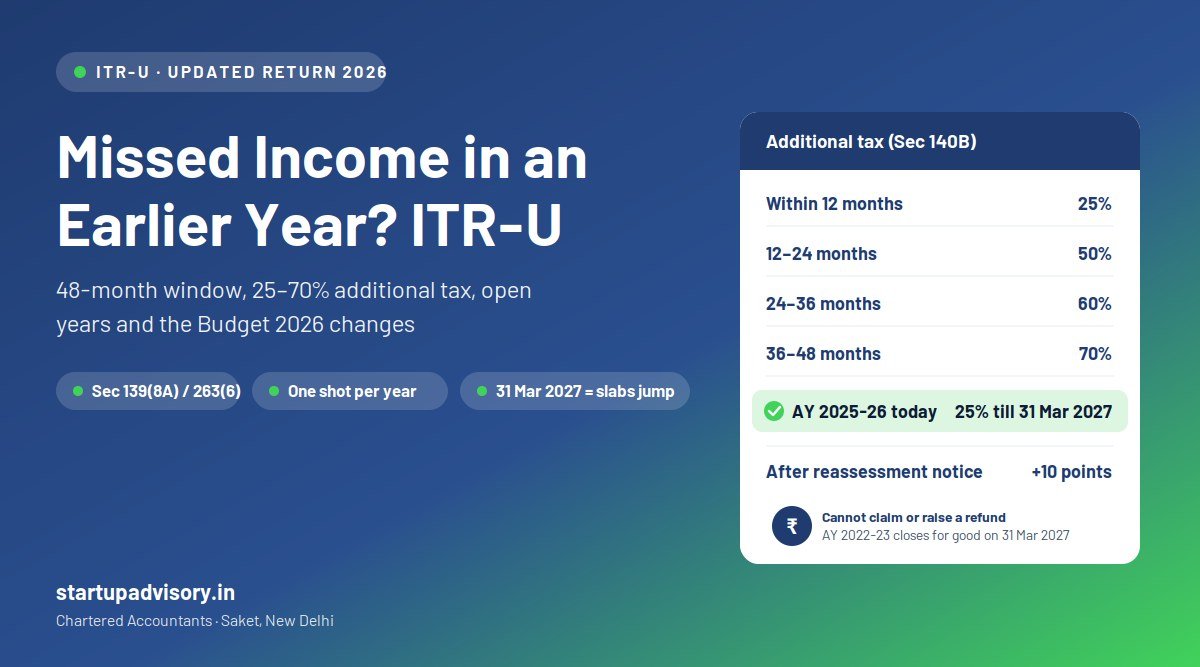
The last door is the updated return (ITR-U) under Section 139(8A) — currently available up to 48 months from the end of the assessment year, but on hard terms: additional tax starting at 25% of the tax and interest due and rising in slabs the later you file, no refunds can be claimed or increased, and no loss can be declared. An ITR-U regularises non-filing and heads off penalty and prosecution exposure; it does not get your money back. If a refund is due to you, the belated return by 31 December 2026 is your only route to it.
A note on the new Income Tax Act
The Income Tax Act 2025 is in force from 1 April 2026, but your AY 2026-27 return covers income earned up to 31 March 2026 and continues to be governed by the Income-tax Act, 1961 — the belated-return, fee and interest provisions above are the familiar 1961-Act sections. See our Income Tax Act 2025 guide for what changes from next year.
This article reflects the law as we understand it in August 2026 and is general information, not tax advice. Late-filing consequences depend on your facts — income level, regime, losses and tax paid — so take professional advice before filing.
How Startup Advisory Can Help
Startup Advisory is a CA-led firm in Saket, New Delhi filing returns for salaried professionals, freelancers and business owners across Delhi NCR:
- Belated return filing done right — AIS/26AS reconciliation, correct 234F/234A computation, regime check, and e-verification, usually within 24–48 hours.
- Deadline triage — we confirm whether you are actually under the 31 August ITR-3/ITR-4 window before you pay a rupee of late fee.
- Damage control — where losses or regime issues are involved, we compute what is genuinely lost and what can still be preserved.
- Estimate your tax first with our income tax calculator or full tax computation tool.
Call 9311972982 or book a free consultation — every month you wait adds another 1% in interest.