
Income Tax / Advance Tax
Advance Tax Due 15 December 2026: Who Pays, How Much and the Interest
This is the first year that advance tax runs under the Income-tax Act, 2025. For Tax Year 2026-27 (1 April 2026 to 31 March 2027), the advance tax rules that sat in sections 207 to 211, 234B and 234C of the 1961 Act are now in sections 404 to 408, 424 and 425 of the new Act. The instalment dates and percentages are the same as before. This guide sets out what the new sections say, using the text published by the Income Tax Department.
1. Who has to pay advance tax for Tax Year 2026-27?
Anyone whose advance tax for the year is ₹10,000 or more has to pay it during the year. Section 404 (Conditions of liability to pay advance tax) says that advance tax is payable “where the amount of such tax payable during that year, as computed under this Part, is Rs. 10000 or more”. It applies to every kind of taxpayer: individuals, Hindu undivided families, firms, LLPs and companies.
The ₹10,000 test is applied after TDS and TCS. Section 405 (Computation of advance tax) works out advance tax as the tax on your estimated current income, less the income-tax that would be deducted or collected at source during the year on income included in that estimate. So a salaried employee whose employer deducts the full tax usually has nothing left to pay. Someone with rent, interest, capital gains, freelance fees or business profits on top of salary often does.
You estimate the income yourself and pay on your own accord, on your “current income as estimated by the assessee” (section 406).
2. What are the advance tax instalment dates for Tax Year 2026-27?
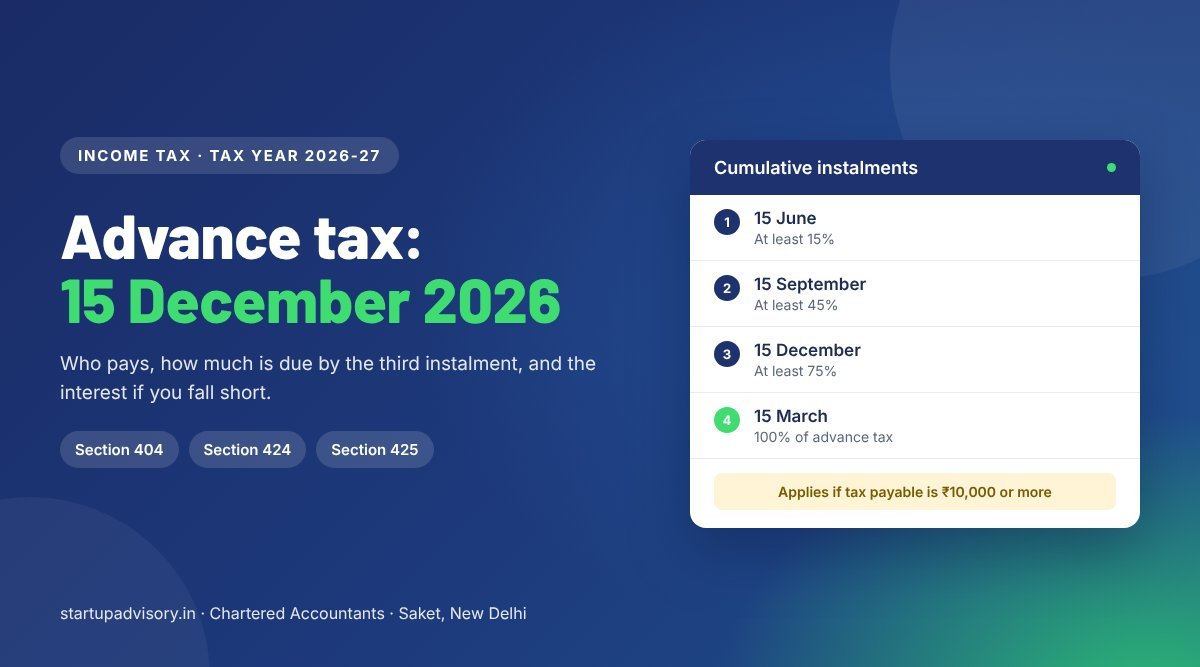
There are four instalments, and each one is cumulative. The table in section 408 (Instalments of advance tax and due dates) sets them out:
| Due date | Total advance tax paid by this date (cumulative) | Status today |
|---|---|---|
| 15 June 2026 | Not less than 15% | Passed |
| 15 September 2026 | Not less than 45% | Passed |
| 15 December 2026 | Not less than 75% | Next due |
| 15 March 2027 | The whole amount (100%) | Final instalment |
Section 408(3) adds that any advance tax paid on or before 31 March is treated as advance tax paid during that financial year. Payment is made online through the Income Tax Department’s e-filing portal. Keep the challan details, because you will need them when you file the return for Tax Year 2026-27.
3. How much advance tax is due by 15 December 2026?
At least 75% of your estimated advance tax for the year, minus what you have already paid in June and September. The steps are simple:
- Estimate your total income for Tax Year 2026-27. Use actual figures from April to November and a realistic estimate for December to March. Include salary, business or professional income, rent, interest, dividends and any capital gains already made.
- Work out the tax on it. Apply the slab rates or company rate that apply to you, with surcharge and cess. Our advance tax calculator and Tax Year 2026-27 rates guide help with this.
- Subtract TDS and TCS. Take off the tax that will be deducted or collected at source during the year on income you have included. The balance is your advance tax. If it is below ₹10,000, no advance tax is payable.
- Take 75% and subtract what you have paid. The difference is what you need to pay by 15 December 2026.
Re-estimate before each instalment. If business has been better than you expected in April, pay the higher figure now rather than in March. If it has been worse, you can pay less, but keep a note of how you arrived at the estimate.
4. Do presumptive taxpayers pay a December instalment?
No. Section 408(2) says that an assessee who declares profits under section 58(2) (Table: Sl. No. 1 or 3) of the Income-tax Act, 2025 pays “the whole amount of advance tax on the current income” on or before 15 March. These are the presumptive schemes that replaced sections 44AD and 44ADA of the 1961 Act, used by many small businesses and professionals. Our presumptive taxation guide explains how the scheme works.
So a freelancer on the presumptive scheme has nothing to pay on 15 December 2026. The full amount is due by 15 March 2027. If it is paid late or short, section 425(3) charges simple interest at 1% on the shortfall.
5. What interest applies if you pay less than 75% by 15 December?
Two separate interest charges can apply, and they replace the old sections 234C and 234B.
Section 425: interest for deferment of advance tax (old 234C)
Section 425 (Interest for deferment of advance tax) charges interest when an instalment is short. It is worked out against the tax due on your returned income, not your estimate:
| Instalment | Advance tax due on returned income | Interest on the shortfall |
|---|---|---|
| 15 June | 15% | 3% |
| 15 September | 45% | 3% |
| 15 December | 75% | 3% |
| 15 March | 100% | 1% |
The Income Tax Department’s FAQs on interest under sections 423 to 426 describe the same charge as 1% a month for three months on the June, September and December shortfalls, and for one month on the March shortfall. There is also a cushion for the first two instalments: no interest is charged if you paid at least 12% by 15 June or at least 36% by 15 September (section 425(2)). There is no cushion in December. The test is 75%.
In the example above, if the consultant pays nothing in December and the remaining ₹2,20,000 in March, the shortfall at 15 December is ₹1,20,000. Interest under section 425 is ₹1,20,000 × 3% = ₹3,600, assuming her returned income matches her estimate.
Section 424: interest for default in payment of advance tax (old 234B)
Section 424 (Interest for defaults in payment of advance tax) applies if, by the end of the year, you paid no advance tax or paid less than 90% of the assessed tax. The charge is simple interest at 1% for every month or part of a month, from 1 April after the tax year up to the date your income is determined, on the unpaid amount. For Tax Year 2026-27 that clock starts on 1 April 2027.
“Assessed tax” is the tax on your total income as determined, less TDS, TCS and certain reliefs and credits listed in section 424(2). Section 424 and section 425 interest can both apply in the same year, which is why catching up in December is cheaper than waiting.
6. What about capital gains and other one-off income?
You do not have to predict a gain you have not made yet. Section 425(4) says that no deferment interest is charged on a shortfall caused by:
- capital gains;
- income under section 2(49)(n) of the Act;
- business or professional income arising for the first time; and
- dividend income,
provided you pay the full tax on that income in the remaining instalments or by 31 March of the tax year. The Department’s FAQ also lists winnings from lotteries, crossword puzzles, races, card games and other gambling or betting in this category.
So if you sold shares or property in October or November 2026, add the tax on that gain to your 15 December instalment. If the gain comes in January, add it to the March instalment.
7. What should you do before 15 December 2026?
- Pull your income figures from April to November from your books or bank statements.
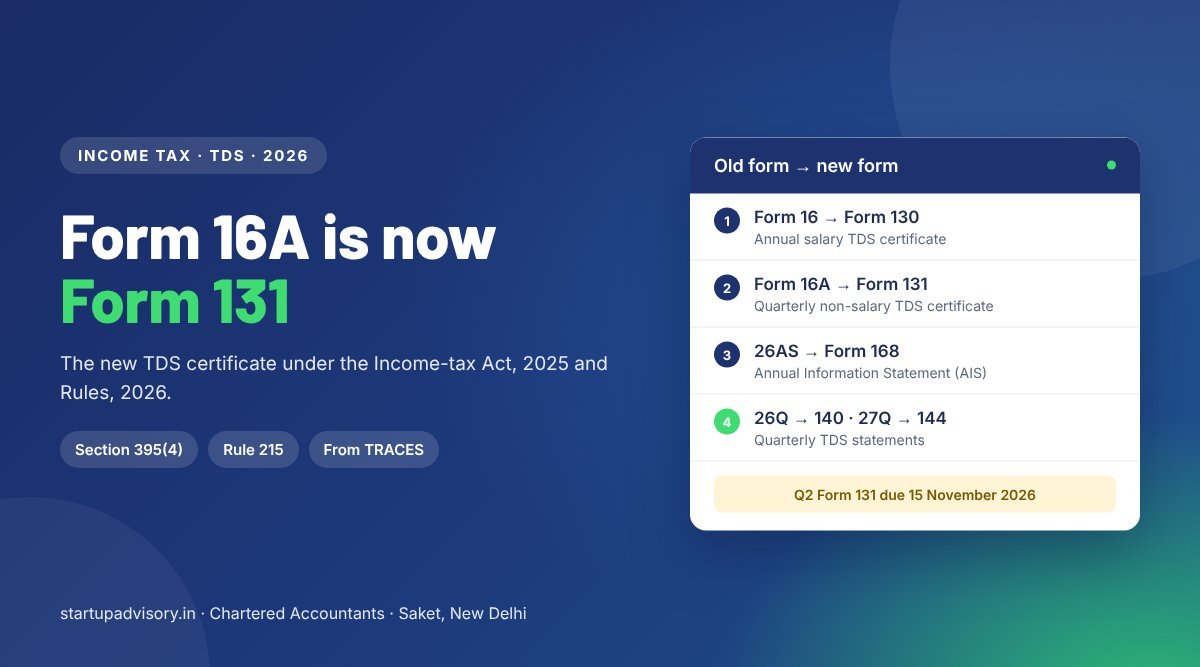
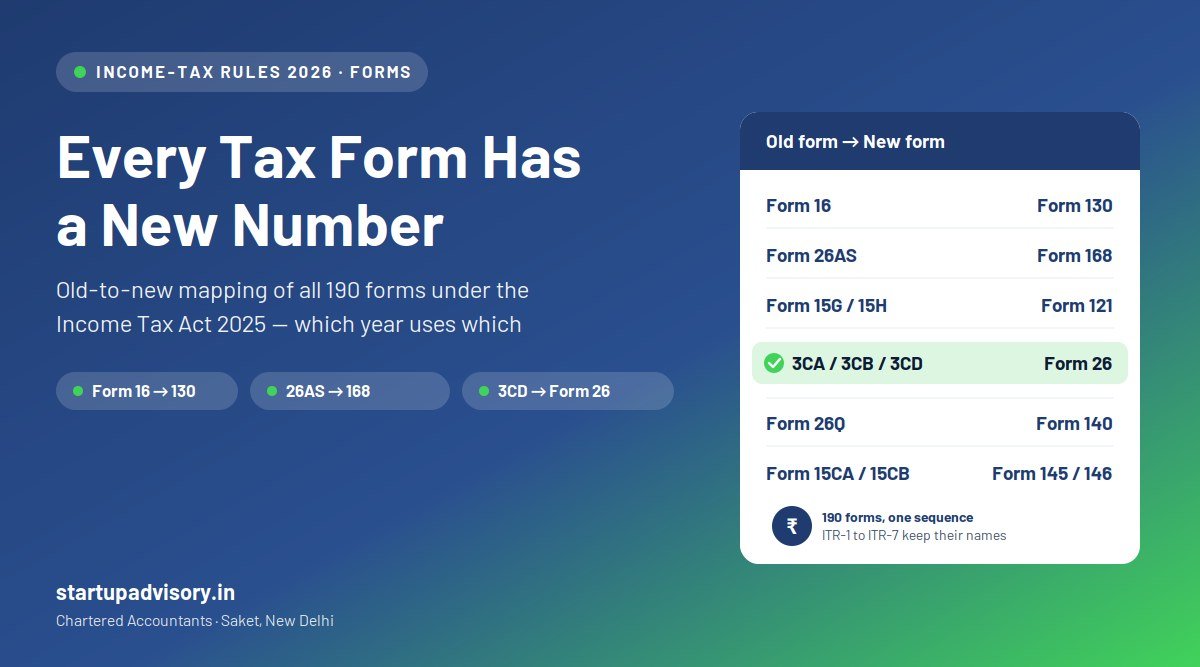
- Check your Annual Information Statement (now Form 168) and the TDS already credited, so your TDS deduction is real. See our note on Form 131 and Form 168.
- Add any capital gains already made this year.
- Recompute the year’s tax, subtract TDS and TCS, and take 75%.
- Pay the balance online a few days before the 15th, so a bank or portal problem does not push it past the due date.
- Keep the challan and a short note of how you estimated the income.
Companies should take the December figure from the board’s latest management accounts rather than the budget. If the management accounts are not ready, a virtual CFO or your accountant can prepare a quick nine-month estimate.
- Income Tax Department, Income-tax Act, 2025: section 404 (conditions of liability), section 405 (computation), section 408 (instalments and due dates), section 424 (interest for default) and section 425 (interest for deferment), read on incometaxindia.gov.in on 16 November 2026
- Income Tax Department, FAQs on interest under sections 423, 424, 425 and 426 of the Income-tax Act, 2025
This article is general information, not tax advice. It reflects the Income-tax Act, 2025 as published by the Income Tax Department and read on 16 November 2026. The worked example is an illustration, not a client case. Check for any CBDT notification or extension before the due date.
How Startup Advisory Can Help
Startup Advisory, in association with KNAP Advisory Private Limited, is a CA-led firm in Saket, New Delhi. For founders, freelancers and companies across Delhi NCR, we:
- Estimate your advance tax from your books before each instalment, including capital gains and TDS.
- Work out interest under sections 424 and 425 if an instalment was missed, and plan the catch-up.
- File your return for Tax Year 2026-27 with the advance tax properly credited. See our ITR advisory service.
Call 9311972982 or book a free consultation.