
Income Tax / Creators
Income Tax on YouTube and Game Streaming Income in India: A Worked Guide (2026)
Reviewed by CA Neeraj Rohilla, FCA — Chartered Accountant, Startup Advisory, Saket, New Delhi.
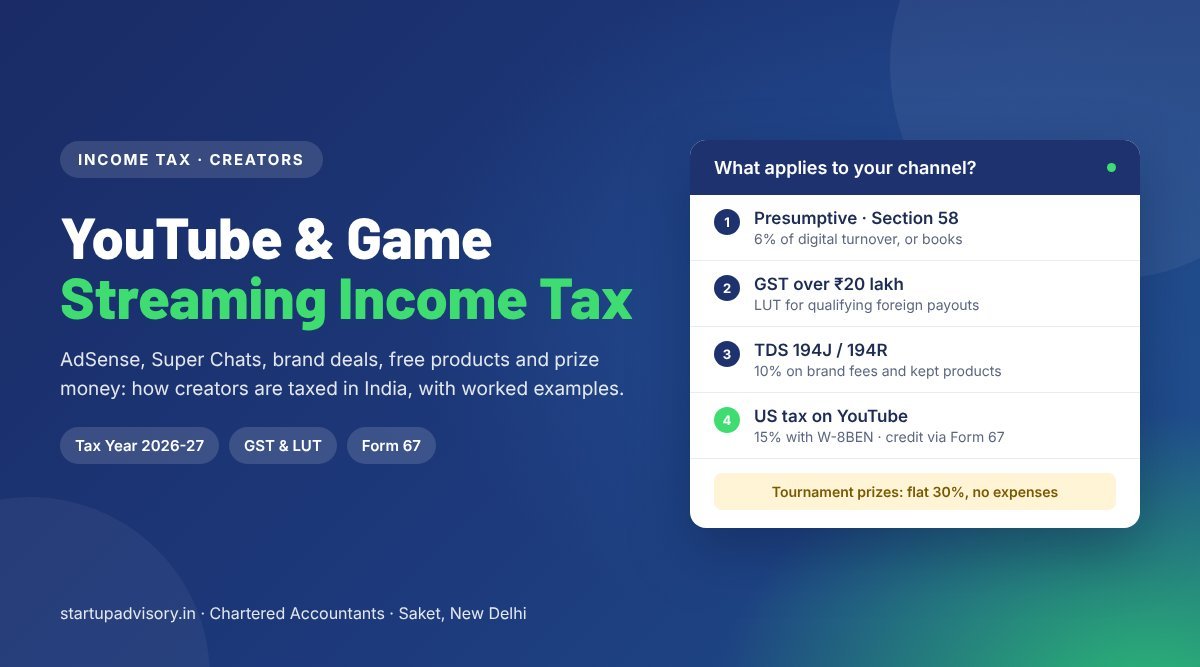
- Everything a creator earns from the channel (AdSense, YouTube Premium share, Super Chats, memberships, streaming-app payouts, brand deals, affiliate commission, free products you keep) is business or professional income, taxed at your slab rate.
- You can pay tax on actual profit (with books), or on a presumptive figure: 6% of digitally received turnover for a business, or 50% of receipts for a specified profession. From Tax Year 2026-27 both sit in Section 58 of the Income-tax Act, 2025.
- GST registration is needed once aggregate turnover crosses ₹20 lakh, and foreign payouts count towards it. Qualifying foreign payouts can go out GST-free under an LUT.
- Tournament prize money is different: flat 30% plus cess, no expenses, TDS at 30%.
- Every creator income stream and its tax
- Presumptive or regular books?
- Expenses streamers can claim
- Worked examples
- GST for YouTubers and streamers
- TDS on brand deals, free products and payouts
- US tax on YouTube earnings and Form 67
- Advance tax dates
- ITR-3 or ITR-4?
- Section numbers under the 2025 Act
Rockstar Games has set 19 November 2026 as the launch date for Grand Theft Auto VI. For Indian gaming channels that means a rush of GTA 6 playthroughs, live streams and Shorts, sitting alongside regulars like BGMI, Free Fire, Valorant, Minecraft and GTA V roleplay. It also means a bigger income year for a lot of creators who have never thought about advance tax, GST or the US tax YouTube quietly withholds.
This guide explains how each kind of creator income is taxed in India, with numbers. It covers Tax Year 2026-27 (1 April 2026 to 31 March 2027), the first year under the Income-tax Act, 2025, and gives the old Income-tax Act, 1961 section numbers alongside, because most creators (and their brand partners) still know the rules by those numbers.
1. Every creator income stream and how it is taxed
For a resident creator, all of these are taxed under the head profits and gains of business or profession. What differs is who pays you, whether tax is deducted, and how GST treats the payment.
| Income | Typical payer | Tax deducted before you get it | GST once you are registered |
|---|---|---|---|
| YouTube ad revenue (AdSense), YouTube Premium share | Google, from abroad | US tax on the US-viewer share (see section 7) | Export of services, GST-free under LUT if the conditions are met |
| Super Chat, Super Stickers, Super Thanks, channel memberships | Google, from abroad | US tax on the US-viewer share | Same as ad revenue |
| Indian live-streaming app payouts (for example Rooter or Loco) | Indian platform | TDS as applicable to that platform (for example 0.1% where it acts as an e-commerce operator) | Domestic supply, GST charged |
| Brand deals and sponsorships | Indian brand or agency | TDS, usually 10% (professional fees) or 1% (contract) | 18% GST on your invoice |
| Free products you keep (barter deals) | Brand | 10% TDS if over ₹20,000 a year from one brand | Depends on the deal; ask your CA |
| Affiliate commission | Indian or foreign affiliate programme | As per payer; check AIS | Domestic or export, depending on the payer |
| Tournament prize money | Organiser | 30% TDS | Not a supply of service |
Tournament winnings are the one exception to slab taxation. They are taxed at a flat 30% (plus surcharge, if any, and 4% cess), with no deduction for expenses, and the organiser deducts TDS at 30%. Everything else in the table goes into your business income.
2. Presumptive taxation or regular books?
You have three ways to work out taxable income from your channel.
(a) Presumptive, as a business: 6% of digital turnover
Section 44AD of the 1961 Act, now Section 58(2), Table serial no. 1 of the 2025 Act, lets a resident individual, HUF or firm (not an LLP) declare profit at 6% of turnover received through banking or online modes and 8% of the rest, or a higher actual profit. The turnover limit is ₹2 crore, raised to ₹3 crore where cash receipts do not exceed 5% of turnover. Creators paid entirely by bank transfer almost always meet the higher limit. No books are required while you declare at least the presumptive rate.
(b) Presumptive, as a specified profession: 50% of receipts
Section 44ADA, now Section 58(2), Table serial no. 3, deems income at 50% of gross receipts, for receipts up to ₹50 lakh (₹75 lakh where cash receipts do not exceed 5%). It is open only to a “specified profession”. Section 62(4) of the 2025 Act lists legal, medical, engineering, architectural, accountancy, technical consultancy, interior decoration, information technology and company secretary, plus professions notified by the CBDT; the department’s presumptive FAQ also lists film artists and authorised representatives. A person carrying on a specified profession cannot use the 6% route.
(c) Regular books: actual profit
Receipts minus genuine expenses and depreciation. You keep books, and if your income exceeds ₹2.5 lakh or your turnover exceeds ₹25 lakh in any of the three preceding years, books are compulsory for an individual in business (Section 62(2), formerly 44AA).
Two rules to remember with presumptive taxation:
- Five-year lock-out. If you declare presumptive profit in one year and then declare less than the presumptive rate in a later year, you cannot use the scheme for the next five tax years (Section 58(7), formerly 44AD(4)).
- Lower profit means books and audit. If you claim profit below the presumptive rate and your total income exceeds the basic exemption limit, you must keep books and get them audited (Section 58(8)).
3. Expenses streamers can claim (regular books only)
Under presumptive taxation all expenses are deemed to be covered by the 6% or 50%, so you claim nothing extra. With regular books, these are the usual creator expenses, as long as they are for the channel and you have bills:
- Gaming PC, GPU, laptop, capture card: depreciation at 40% a year on written-down value (the rate for “computers including computer software”). A ₹2,50,000 streaming PC gives about ₹1,00,000 of depreciation in its first full year.
- Camera, microphone, lighting, chair, desk: depreciation at the rate for that block of assets.
- Games and in-game purchases bought for content: the cost of a game you buy to stream, such as GTA 6 on launch day, is a channel expense. Buying ten games you never stream will look odd, so keep it to what appears on the channel.
- People: video editors, thumbnail designers, moderators, managers. Pay by bank and collect invoices; check whether you need to deduct TDS on their payments.
- Running costs: internet, electricity share, studio rent, software subscriptions, music licences, travel to events and brand shoots.
Keep a simple monthly ledger from day one. If you ever move from presumptive to books, you will need it.
4. Worked examples
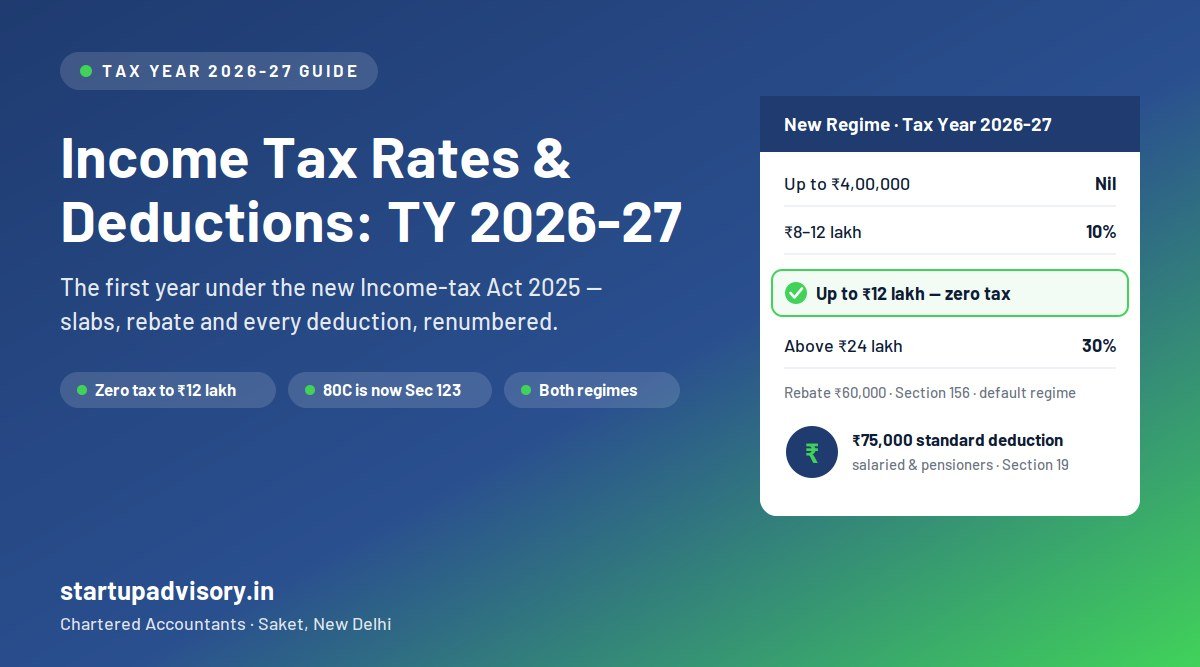
These examples use the new tax regime slab rates for AY 2026-27 (nil up to ₹4 lakh, then 5%, 10%, 15%, 20% and 25% for each ₹4 lakh slab, and 30% above ₹24 lakh) and 4% health and education cess. Check the rates for your tax year before you file.
| YouTube (ads, Super Chats, memberships) | ₹5,40,000 |
| Payouts from an Indian streaming app | ₹1,60,000 |
| Two brand integrations (10% TDS deducted: ₹25,000) | ₹2,50,000 |
| Gross receipts, all by bank | ₹9,50,000 |
Under Section 58 (Table serial no. 1), his income is 6% of ₹9,50,000 = ₹57,000. That is below ₹4 lakh, so his tax is nil, and he files his return to get the ₹25,000 TDS back as a refund. His turnover is under ₹20 lakh, so he does not need GST registration. Even on actual profit (say ₹7.5 lakh after expenses) his tax would be nil, because the new-regime rebate covers total income up to ₹12 lakh.
| YouTube (of which ₹6,00,000 from US viewers, with 15% US tax withheld: ₹90,000) | ₹30,00,000 |
| Brand deals (10% TDS: ₹1,20,000) | ₹12,00,000 |
| Affiliate commission | ₹3,00,000 |
| Gross receipts (excluding GST) | ₹45,00,000 |
| Editor ₹6,00,000 + studio rent ₹2,40,000 + PC depreciation ₹1,00,000 + internet, software and games ₹60,000 + event travel ₹1,50,000 | ₹11,50,000 |
| Actual profit | ₹33,50,000 |
Presumptive (6%): income ₹2,70,000, tax nil. The ₹1,20,000 TDS comes back as a refund. But Indian tax on her US income is nil, so her foreign tax credit is also nil: the ₹90,000 withheld in the US is a cost she cannot recover.
Regular books: tax on ₹33,50,000 is ₹5,85,000 plus 4% cess = ₹6,08,400. Indian tax on her US income (about 18% average rate) exceeds ₹90,000, so she gets the full ₹90,000 credit through Form 67. Net tax ₹5,18,400, less TDS ₹1,20,000 = ₹3,98,400 payable as advance tax.
GST: her turnover crossed ₹20 lakh, so she must register. She charges 18% GST on her brand invoices (₹2,16,000 on ₹12 lakh), can claim input tax credit on GST paid on her PC, rent and editor bills, and exports her YouTube services under an LUT if they qualify.
If her channel income qualifies as business income, the presumptive route is far cheaper. That gap is exactly why her CA should document the classification before she files.
5. GST for YouTubers and game streamers
When you must register
A supplier of services must register once aggregate turnover in a financial year crosses ₹20 lakh (₹10 lakh in the special category states). Aggregate turnover includes taxable supplies, exempt supplies and exports, so your AdSense payouts count towards the limit even if no GST is payable on them.
Foreign payouts: export of services and LUT
Payments from a foreign platform for services you supply from India can be an export of services, which is zero-rated. Under Section 2(6) of the IGST Act, broadly: you are in India, the recipient is outside India, the place of supply is outside India, you are paid in convertible foreign exchange (or in rupees where RBI permits), and you and the recipient are not merely establishments of the same person.
A registered creator can export without paying IGST by filing a Letter of Undertaking (LUT) in Form GST RFD-11 on the GST portal, once for each financial year, before the exports. Without an LUT you would pay IGST and claim a refund later.
Indian brand deals and apps
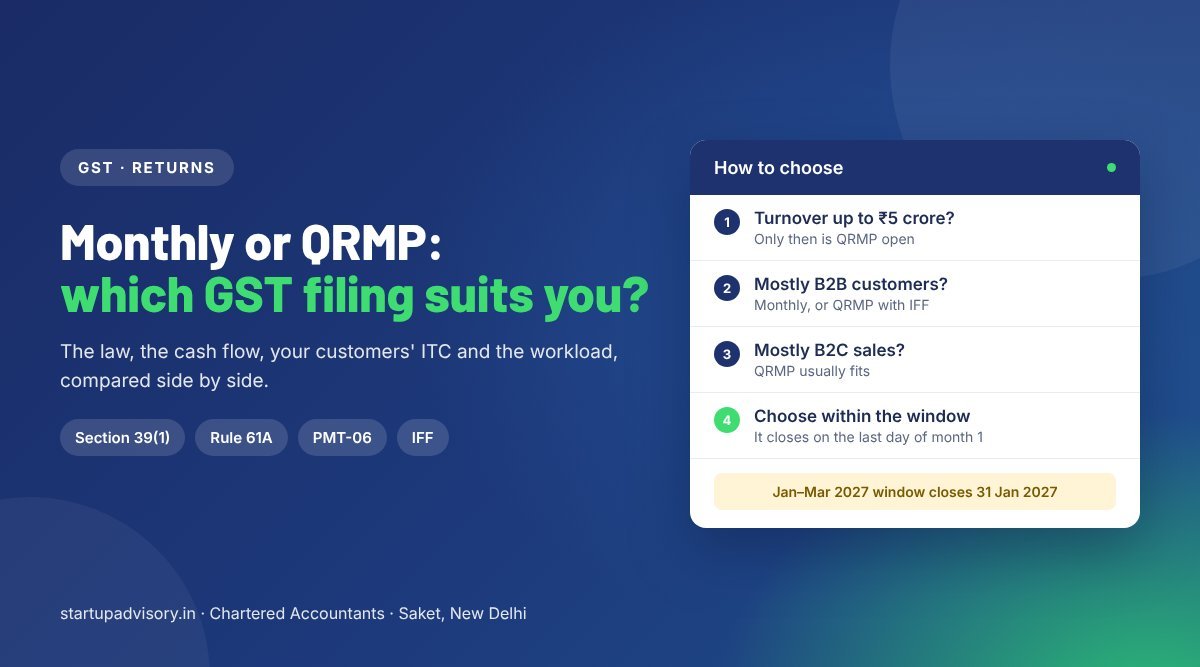
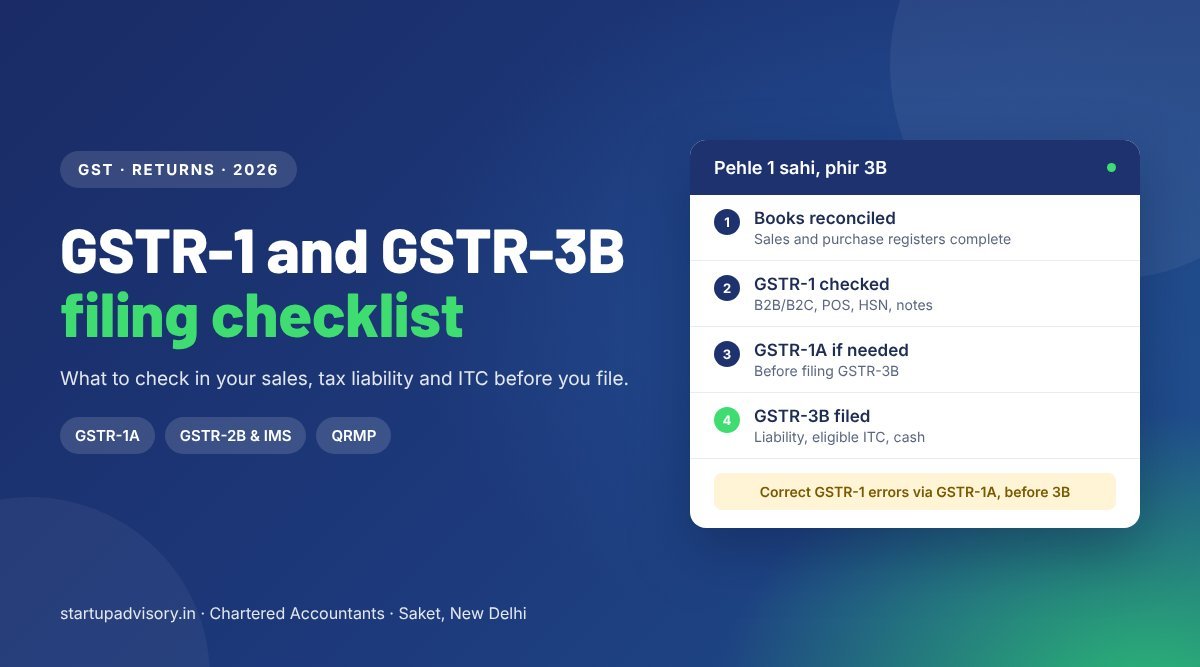
Once registered, your invoice to an Indian brand, agency or streaming app carries 18% GST. You file GSTR-1 and GSTR-3B (see our GSTR-1 and GSTR-3B checklist) and can claim input tax credit on business purchases. Smaller creators can look at the quarterly QRMP scheme.
6. TDS on brand deals, free products and platform payouts
| Payment | 1961 Act section | Rate | Threshold |
|---|---|---|---|
| Fee for professional services (many brand deals) | 194J | 10% | ₹50,000 a year |
| Contract work (some brand deals are framed as contracts) | 194C | 1% to individuals and HUFs, 2% to others | ₹30,000 single payment or ₹1,00,000 a year |
| Free products and other business benefits | 194R | 10% | ₹20,000 a year |
| Payout by an e-commerce operator | 194-O | 0.1% | ₹5 lakh a year for individuals with PAN |
| Tournament and game winnings | 194B / 194BA | 30% | ₹10,000 a transaction (194B); online games have no threshold |
From 1 April 2026 all of these are rows in the table under Section 393 of the Income-tax Act, 2025, with the same rates and thresholds. Without a PAN, tax is deducted at 20% or the table rate, whichever is higher.
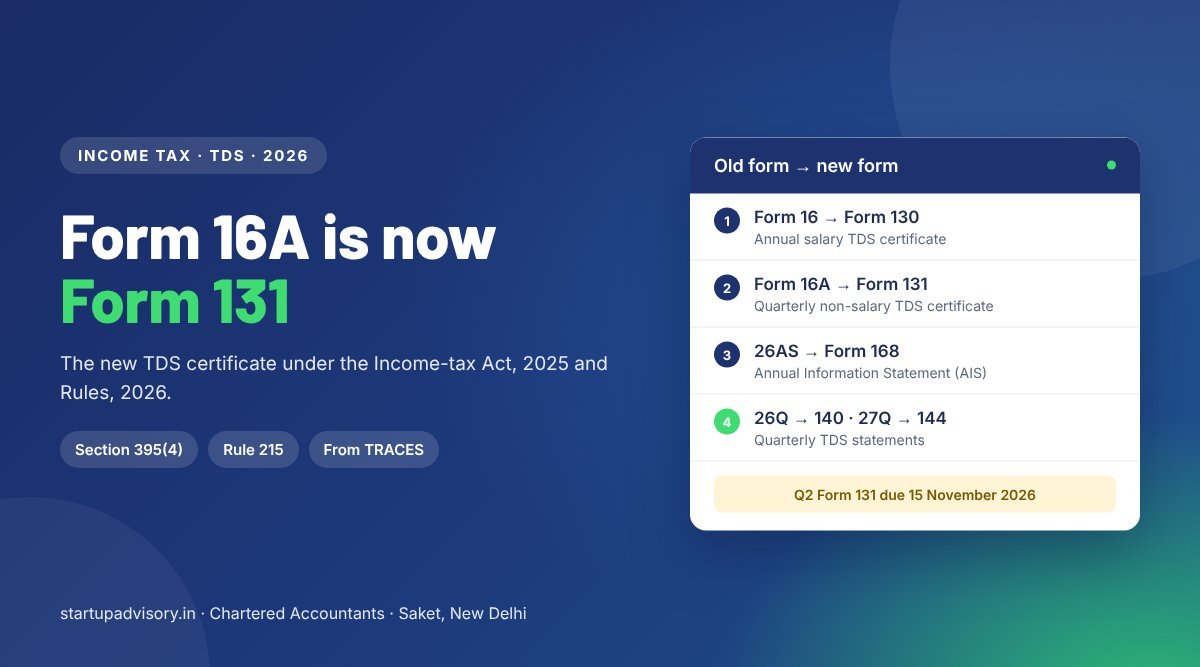
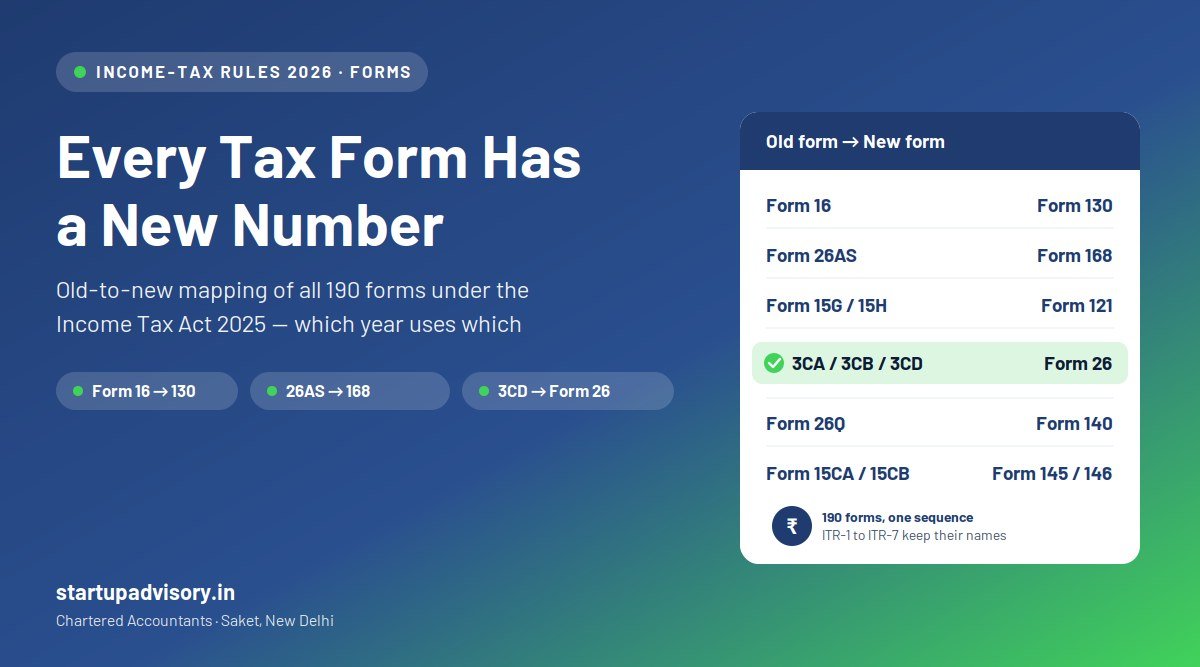
TDS is not an extra tax. It is credited against your final liability, and any excess is refunded when you file. Match every brand’s TDS in your AIS and Form 26AS (now Form 168, with Form 131 replacing Form 16A) before you file, and chase brands that deducted but did not deposit.
For barter deals, the CBDT issued guidelines on Section 194R in Circular No. 12 of 2022, including on products sent to social media influencers: a product used for the promotion and then returned to the brand is not a benefit, while a product you keep is.
7. US tax on YouTube earnings, and getting credit in India
YouTube Help says Google withholds US tax on YouTube earnings from viewers in the United States: ad views, YouTube Premium, Super Chat, Super Stickers, Super Thanks and channel memberships. Only the US-viewer share is taxed, and the rate depends on whether you have submitted your tax information:
| Situation | US tax withheld |
|---|---|
| Tax info submitted, India-US treaty claimed (15%) | $15 |
| Tax info submitted, no treaty claimed (30% of US earnings) | $30 |
| No tax info submitted (24% of total worldwide earnings) | $240 |
So the first step is simple: in AdSense, submit Form W-8BEN with your PAN as the foreign tax ID and claim the treaty. Google asks creators to do this by 10 December each year to avoid higher withholding.
Claiming foreign tax credit with Form 67
- File Form 67 online on the e-filing portal, with proof of the tax withheld (your AdSense tax statement), on or before the end of the assessment year (Rule 128(9)), and file the return itself by the due date or as a belated return.
- The credit is the lower of the Indian tax on that income and the foreign tax paid. Interest, fees and penalties are not creditable.
- Report the foreign income and tax in the foreign-income and tax-relief schedules of ITR-3. ITR-4 does not have them.
- If your Indian tax on that income is nil, as in Sana’s presumptive case above, there is nothing to set the credit against. That is another reason to submit W-8BEN and keep US withholding at 15%.
8. Advance tax: the dates creators miss
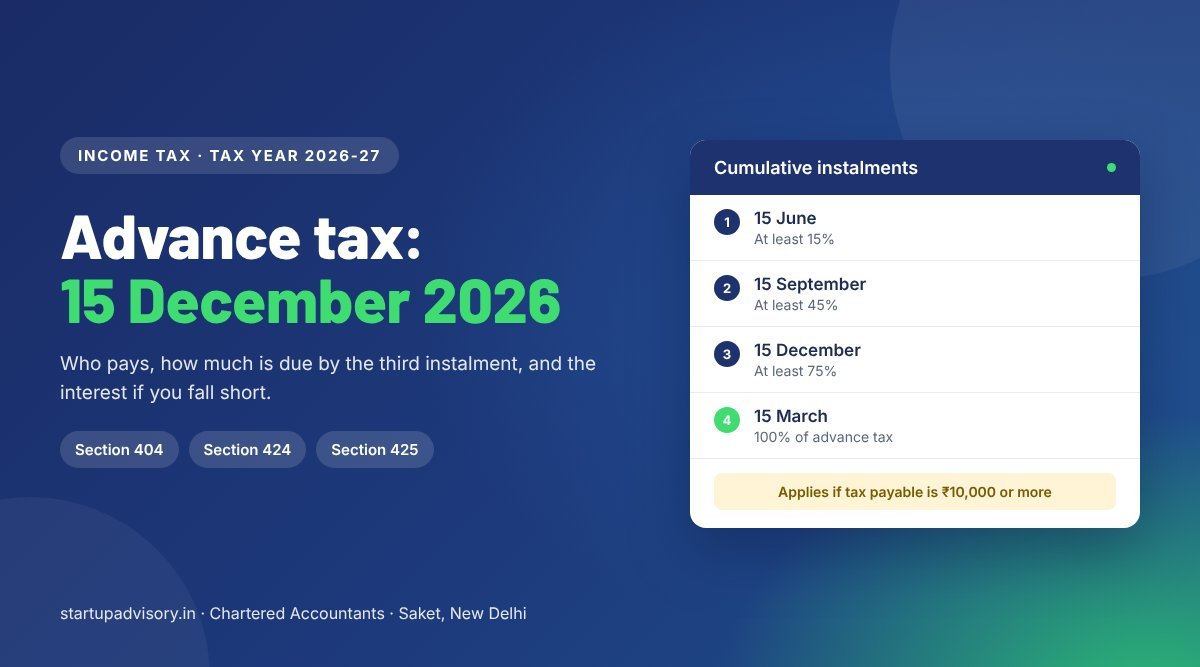
If your tax for the year, after TDS, is ₹10,000 or more, you must pay it in advance during the year (Section 404 of the 2025 Act). Most first-year creators find this out from an interest notice.
| Due date | Regular books (cumulative) | Presumptive (Section 58 Table no. 1 or 3) |
|---|---|---|
| 15 June | 15% | – |
| 15 September | 45% | – |
| 15 December 2026 | 75% | – |
| 15 March 2027 | 100% | 100%, in one go |
Sana, on regular books, needs 75% of ₹3,98,400 (about ₹2,98,800) paid by 15 December 2026. Use our advance tax calculator and see advance tax due 15 December 2026.
9. ITR-3 or ITR-4?
- ITR-4 (Sugam): resident individual, HUF or firm (not LLP), total income up to ₹50 lakh, business income on the presumptive basis. It cannot be used if you have income at special rates (for example tournament winnings), any short-term capital gains, income from outside India, a directorship, or unlisted shares.
- ITR-3: everyone else with business or professional income, including creators on regular books, creators claiming credit for US tax, and creators with prize winnings in the year.
For FY 2025-26 (AY 2026-27), the original due date has passed; a missed return can still be filed as a belated return by 31 December 2026. Returns for Tax Year 2026-27 will be filed in 2027 in the forms notified under the 2025 Act.
10. Old and new section numbers
| Topic | Income-tax Act, 1961 (to AY 2026-27) | Income-tax Act, 2025 (from Tax Year 2026-27) |
|---|---|---|
| Presumptive business / profession | 44AD / 44ADA | 58(2), Table serial nos. 1 and 3 |
| Specified professions, books of account | 44AA | 62 |
| TDS (194C, 194J, 194R, 194-O, 194B, 194BA) | Separate sections | 393 (table rows) |
| Advance tax liability and instalments | 208, 211 | 404, 408 |
| Tax credit statement / TDS certificate | Form 26AS / Form 16A | Form 168 / Form 131 |
More on the switch: old vs new section numbers.
- Submit W-8BEN in AdSense with your PAN and claim the treaty (by 10 December)
- Download AdSense payment receipts and the US tax statement every month
- Track turnover from all platforms and brands; register for GST before it crosses ₹20 lakh
- File the LUT (RFD-11) for the financial year before your first export, once registered
- Collect invoices and keep a record of kept and returned brand products
- Choose presumptive or books with your CA, and stick to it to avoid the five-year lock-out
- Pay advance tax: 15 December and 15 March are the dates that matter now
- Match TDS in AIS / Form 26AS before filing, and file Form 67 if you claim US tax credit
- Income Tax Department, Section 58, Income-tax Act, 2025 (presumptive table: ₹2 crore / ₹3 crore, 6% / 8%; specified profession ₹50 lakh / ₹75 lakh at 50%; five-year bar; books and audit if lower profit)
- Income Tax Department, Section 62, Income-tax Act, 2025 (specified professions; books thresholds ₹2.5 lakh / ₹25 lakh for individuals)
- Income Tax Department, FAQs on presumptive taxation and FAQs on advance tax; Section 408 (instalments; presumptive taxpayers pay by 15 March)
- Income Tax Department, FAQs on TDS under the Income-tax Act, 2025 (Section 393 rates and thresholds for Tax Year 2026-27; 20% without PAN)
- Income Tax Department, New Appendix I (computers including computer software: 40%) and Rule 128 (foreign tax credit, Form 67 by end of assessment year)
- Income Tax Department, Circular No. 12/2022 (Section 194R guidelines)
- e-Filing portal, Individuals with business / profession income, AY 2026-27, ITR-4 FAQs and Form 67 user manual; tax rates
- GST portal, Furnishing of LUT for export of goods or services; CBIC GST FAQs (threshold, aggregate turnover includes exports)
- YouTube Help, US tax requirements for YouTube earnings and Submitting your US tax info to Google
- Rockstar Games Newswire, Grand Theft Auto VI launch date
Sources read on 18 November 2026. Game titles mentioned (Grand Theft Auto VI, GTA V, BGMI, Free Fire, Minecraft, Valorant, Fortnite) are trademarks of their respective owners and appear only as examples of streaming content.
Creator ho? Let us handle the tax side
We set up your books or presumptive filing, GST registration and LUT, check every brand’s TDS, file Form 67 for your YouTube US tax, and remind you before each advance tax date.
Book a consultation ITR filing services
General information; every case is different. Speak to your CA before you file.